Following The Apprentice trail – their Scavenger Hunt in Hong Kong – Part 2

Part one was all about the excitement of seeing Hong Kong on screen; now it’s time to talk tactics. In episode one of season 20 of The Apprentice, Lord Sugar sent two fresh teams into the city with a fiendish shopping list and just eight hours to get it done. Watching them zigzag across town, miss obvious shortcuts and ignore local clues, we couldn’t stop asking the same question: with a bit of Hong Kong know‑how, how much better could they have done?


In this second part, we break down their day item by item, look at where they went wrong (and occasionally right), and map out the smarter routes they could have taken. Nine items, one city, eight hours – here’s how the task could really have been won.

Reminder of the shopping list:

1. Shrimp paste – specified as “10 x 300g brick”

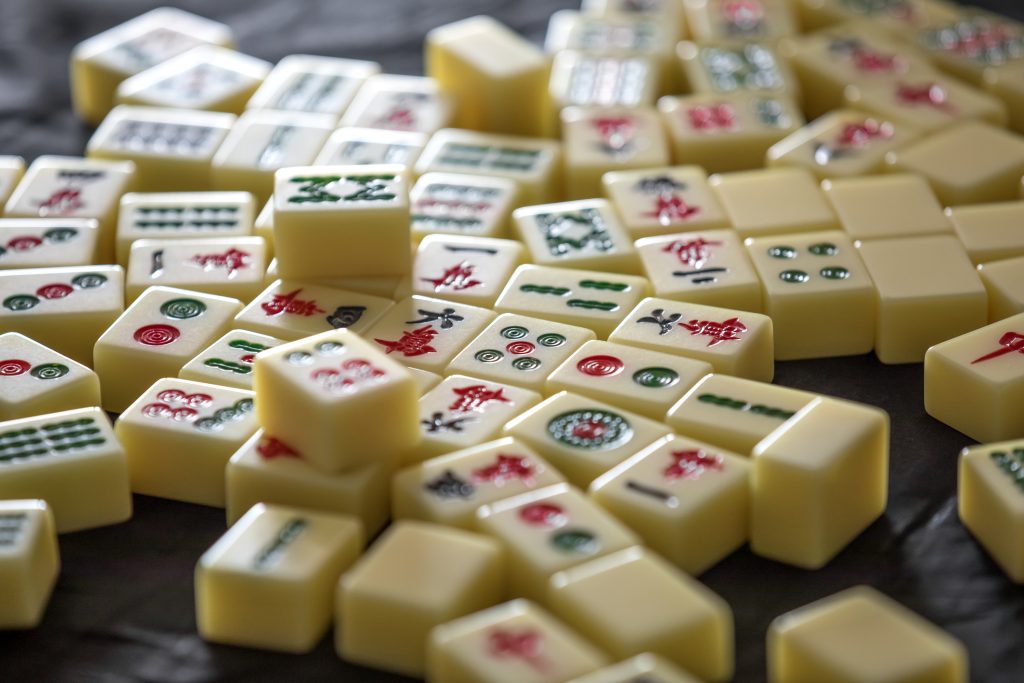
2. Mahjong set – “hand painted”

3. Baby corn – “4 catty, picked today”

4. Chinese calligraphy brush – a brush for Chinese writing (around 20 cm).

5. Dragon boat head – a wooden dragon head fixed to the front of a dragon boat, required to be about one metre in length.

6. Golden pineapple

7. Erhu

8. Ding ding illustration

9. Tea cake – “labelled 2005”

You can read more information on these local items in Part 1 of Following the Apprentice trail.

Part 2: What the teams did…

Stanley

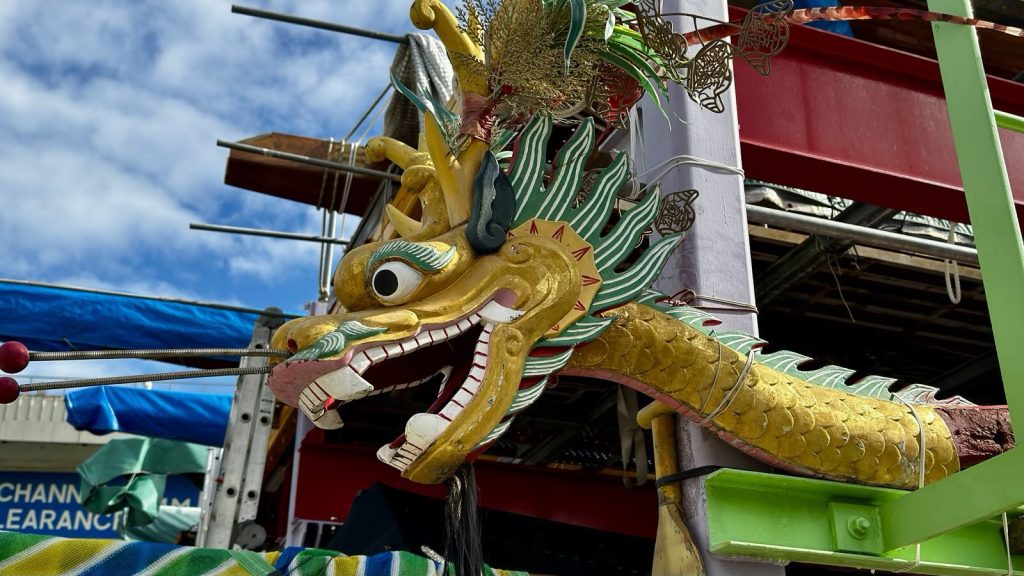
OK, Stanley. This is where many of you will remember that both teams made the trek out to the south side of Hong Kong Island – and both successfully secured the dragon boat head and ticked it off their list. The dragon boat head wasn’t bought in the market at all, but down at Stanley Beach, which makes perfect sense given that’s where real teams train and store their boats.
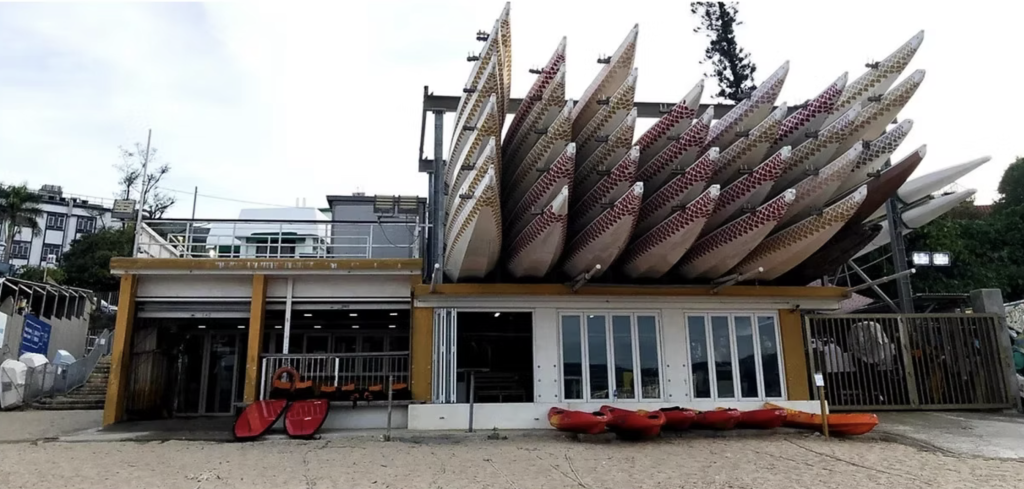
Stanley Dragon Boat Association


Crucially, the candidates weren’t battling for seats on the bus like regular visitors – they had private vehicles for the whole task. That should have made their day far more efficient, cutting out the waiting and walking time that comes with public transport. However, it didn’t help that the girls’ team famously managed to lose their driver, and basically lost the task trying to reunite with him.

The Wong family seem to have the arts and antiques cornered in Stanley Market!

Once they’d gone all that way, they could easily have picked up several more items in the same area. Stanley Market is packed with Chinese arts, crafts and souvenirs, while just beside Stanley Plaza the Tin Hau Temple area is where you’re most likely to find the golden pineapple as a paper offering used for worship. Between the market stalls, art and calligraphy stands, music and curios shops, and tram‑themed souvenirs, they stood a good chance of finding a ding ding illustration, an erhu, a Chinese calligraphy brush and that elusive golden pineapple without having to criss‑cross the whole city.
The trade‑off, of course, is still time. Even with private vehicles, Stanley is a long way from downtown, and it’s even longer once you factor in getting across to Lantau Island and up to the Big Buddha later in the day. In an eight‑hour task, that’s a serious chunk of the schedule spent on the road, even if the area itself is almost a one‑stop shop for several of the trickier items.

Where we would have gone for: Shrimp paste, corn, dragon boat head and golden pineapple offerings

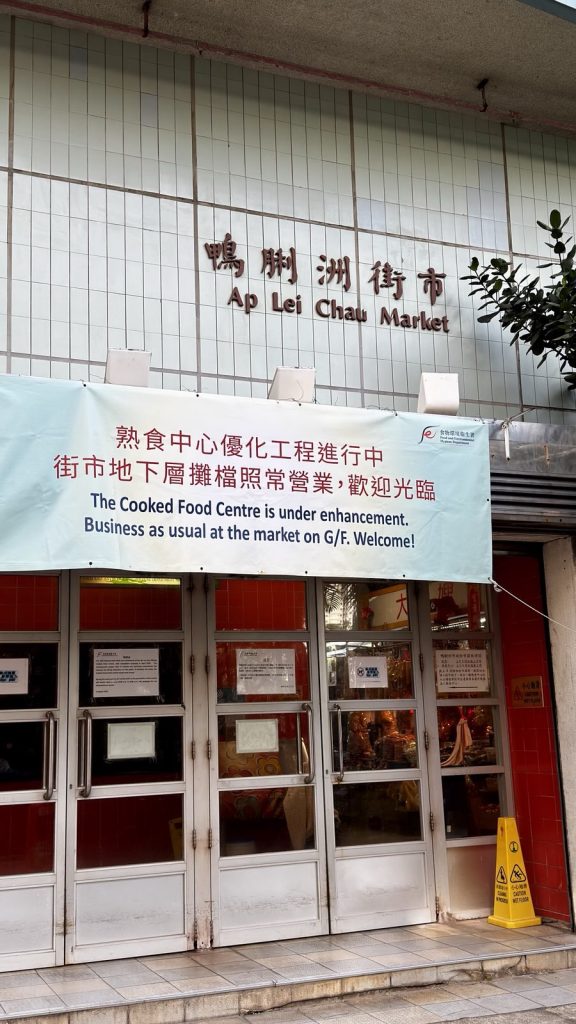
Ap Lei Chau Main Street

OK, so here is what they could have done – and the girls were SO close! In Aberdeen, the teacher at Mulberry House Kindergarten actually pointed them in the right direction, but where she told them to turn right, they turned left and ended up completely lost instead.
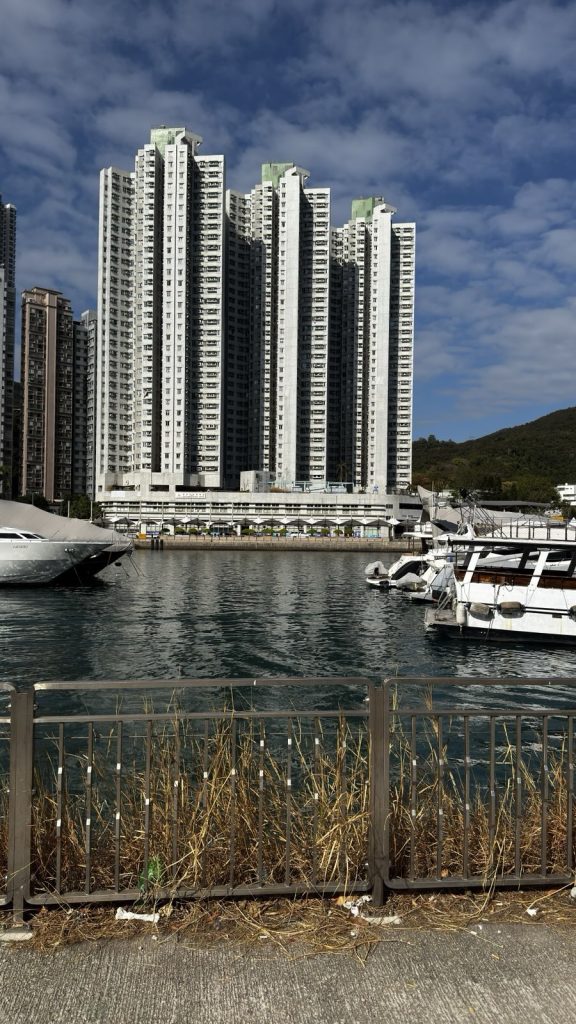
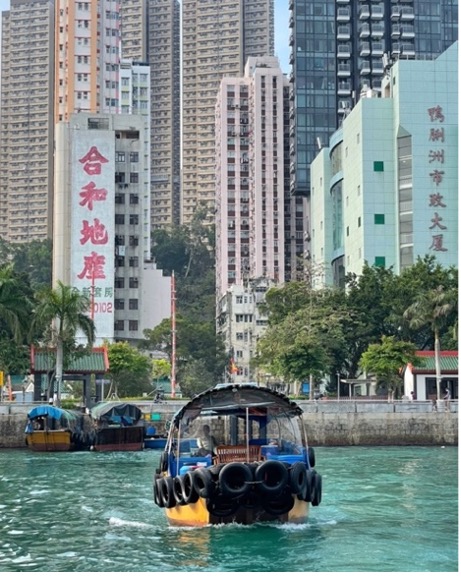
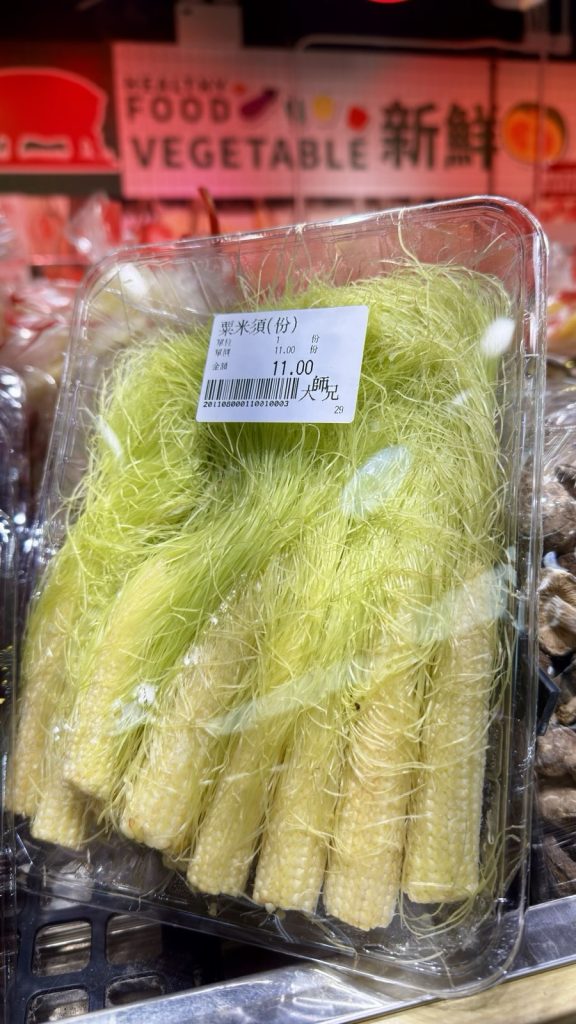
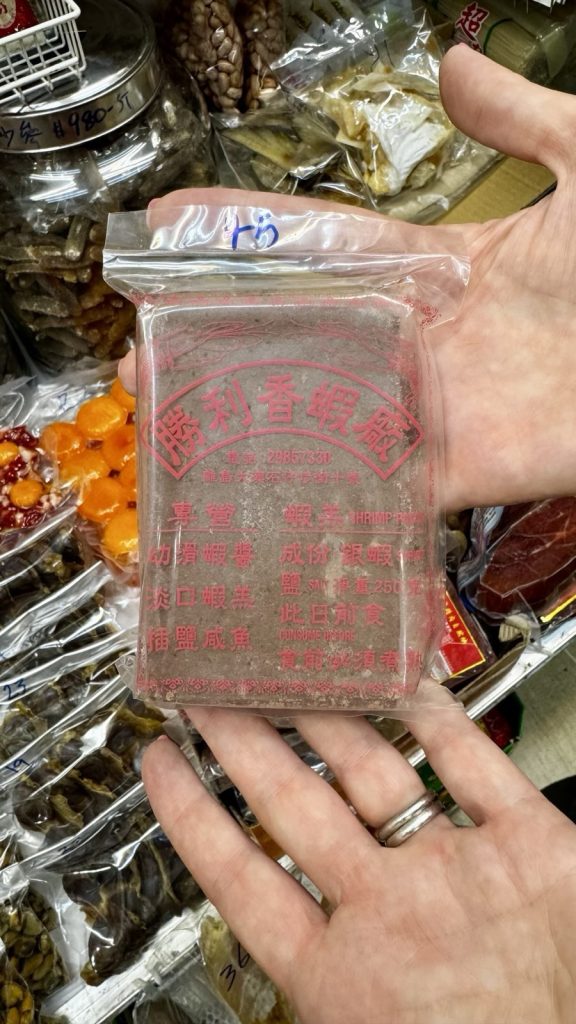
From Aberdeen, they had two very straightforward options: hop on the little kaito ferry across the water or jump back in their car and drive over to Ap Lei Chau. If they’d done that, they would have been in exactly the right neighbourhood for several of the items on their list. Ap Lei Chau is home to working fishing communities and a very abundant wet markets, and this is where they could realistically have sourced the shrimp paste, a dragon boat head, and found four catty of baby corn picked that day.

We found exactly these items in about 30-40 minutes.
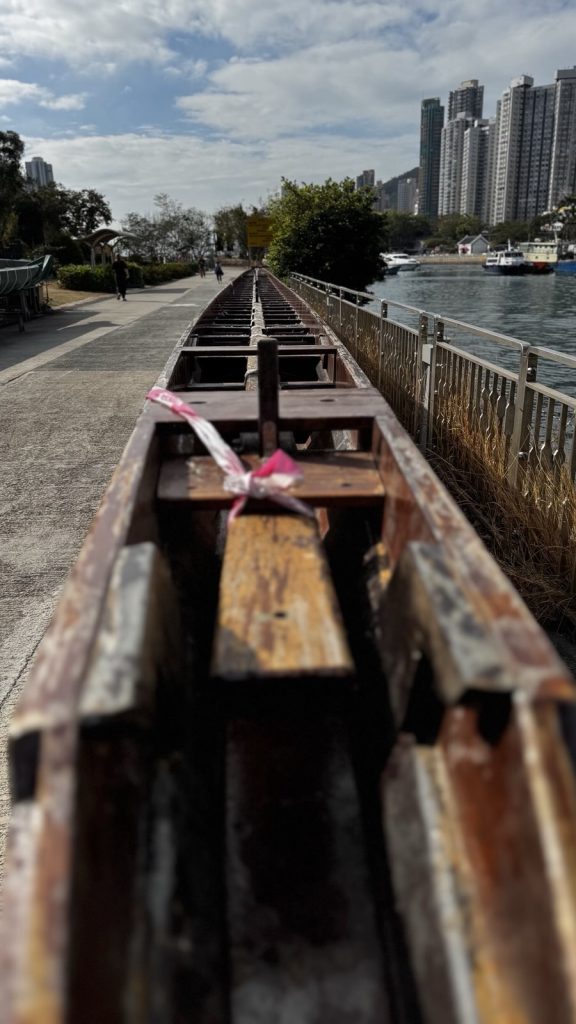
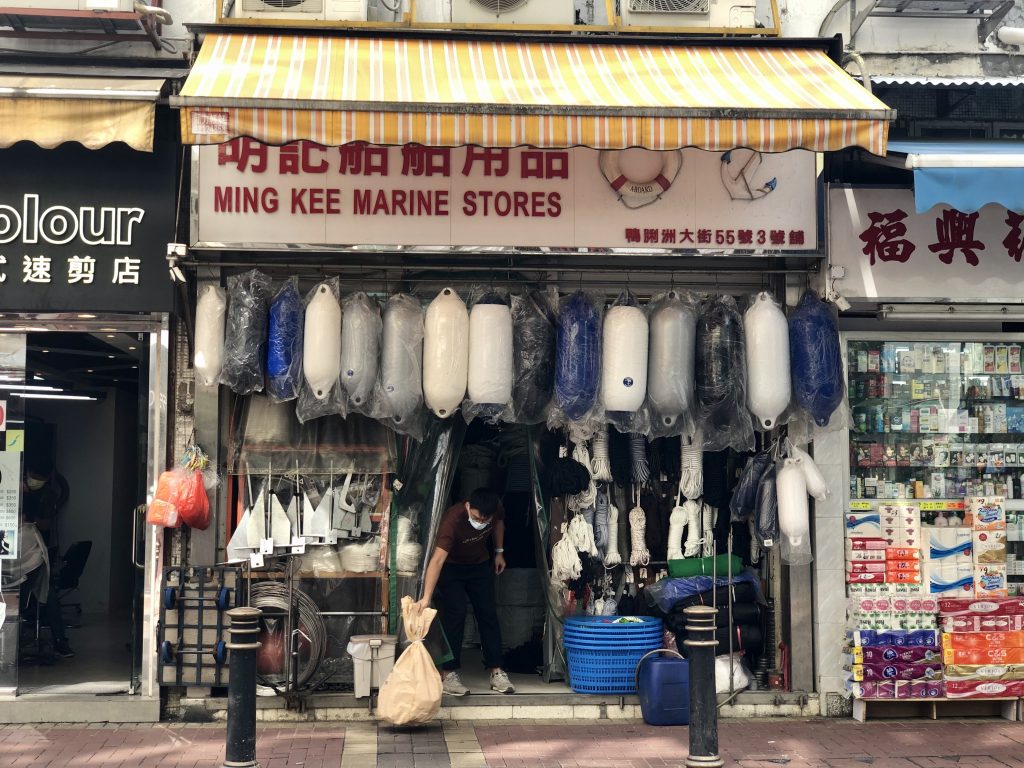
Ap Lei Chau is also home to a large fishing community with plenty of specialist boat builders, marine supply yards and at least three Dragon Boat Associations. Whilst Stanley wasn’t a bad shout for this item in our opinion, this area crucially could have been lucrative and saved so much time.

It’s also worth noting that the Aberdeen Wholesale Fish Market – where they actually ended up, only to find it closed – was never going to be the right place for bricks of shrimp paste. That kind of fermented product is sold through a very different network of shops and producers, not straight off the wholesale fish floor.

And finally, the Golden Pineapple offering…
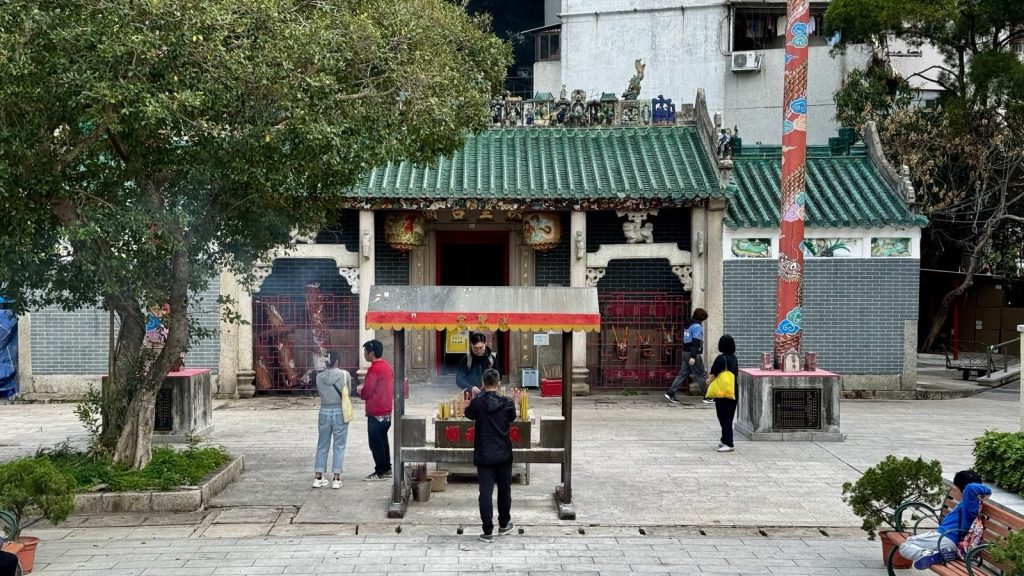
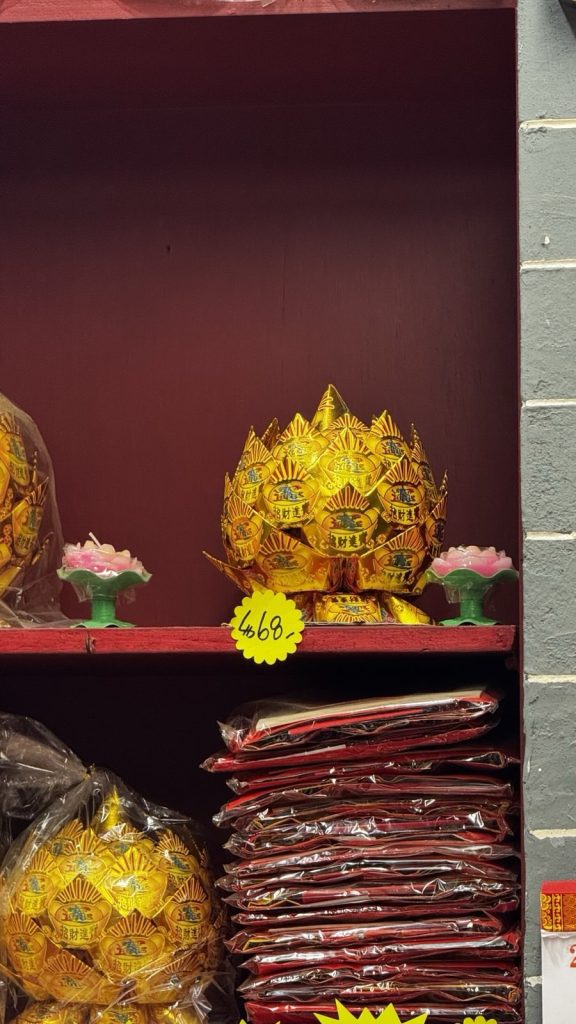
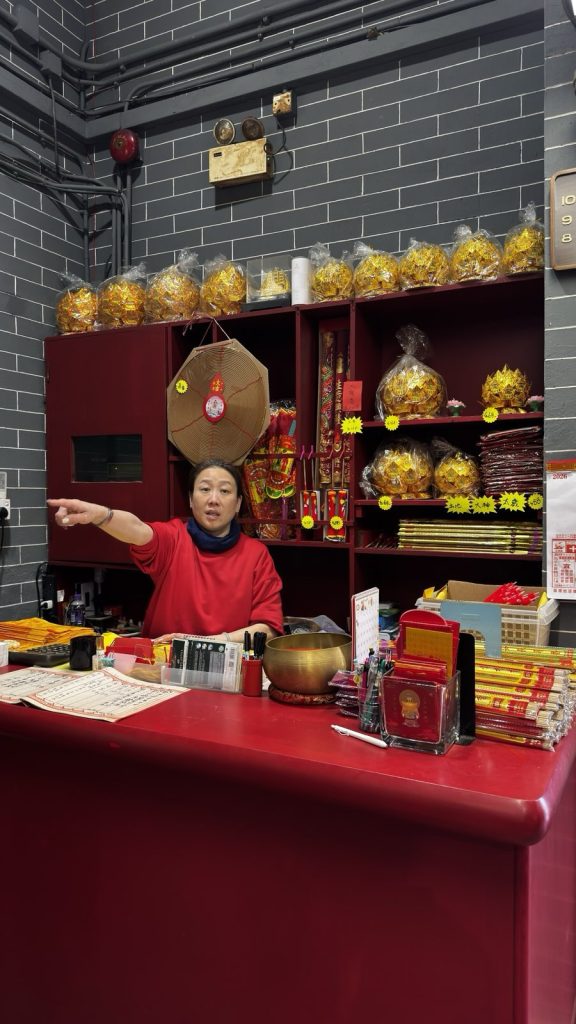
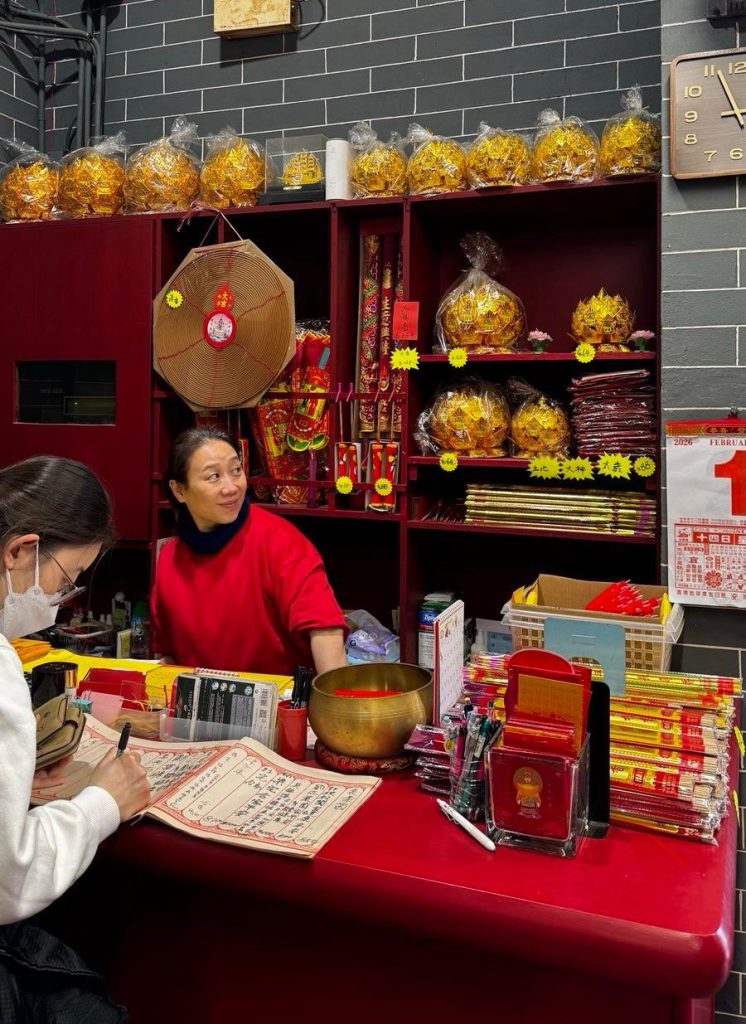
We would be certain that almost any temple would stock them. This is the Hung Shing Temple we walked into next to the Ap Lei Chau wet market. That would have been four out of the nine items ticked off already.

Central district

With more items still to track down, half the girls headed to Central in search of the mahjong set and baby corn – though quite why they didn’t pick up the vegetables around Peel Street and Graham Street (which they definitely walked through!) remains a mystery. In the end, they did manage to secure the mahjong set at Glocal Mahjong in PMQ, but not without a struggle; even finding the right unit number in Hong Kong’s high‑rise maze seemed to throw them off. Full credit, though, for negotiating an impressive 50% discount with the owner. That’s a note to ourselves for next time a guest asks where to buy a set – it is clearly it’s worth singing very nicely.

Photo credit: BBC

Where we would have gone for: mahjong, ding-ding illustration and tea cake

Hollywood Road, Central


Glocal Mahjong would have been our first choice for the hand-painted mahjong set too, simply because it’s the most commercially accessible option. If you’re after a truly traditional, hand‑carved set from a specialist workshop, you’re usually looking at a six‑month pre‑order and a price tag in the thousands, which doesn’t exactly fit an eight‑hour Apprentice budget.
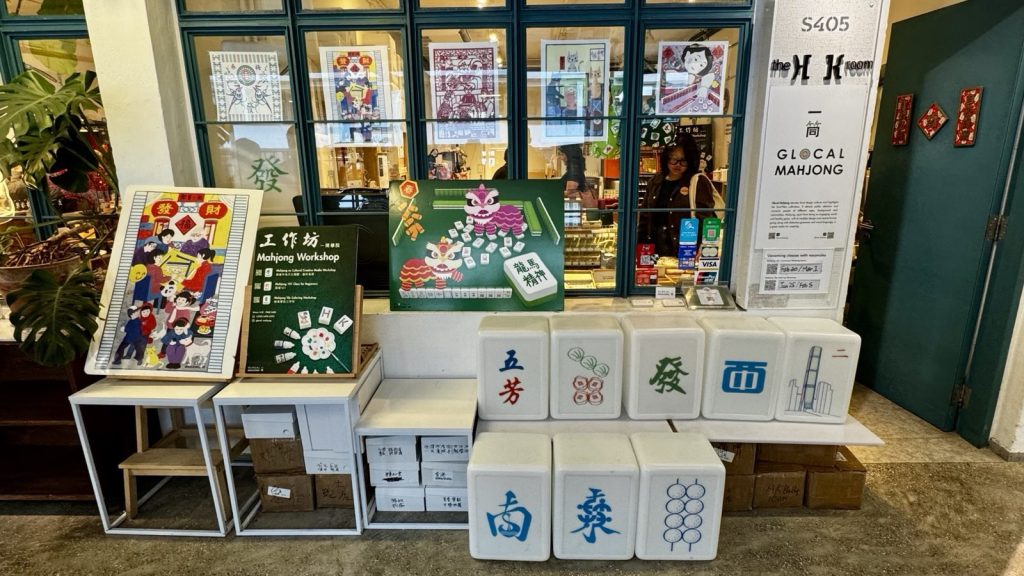
How to read a Hong Kong address:
Glocal Mahjong
Shop 405 (shop, unit or flat number)
4/F (fourth floor in Hong Kong)
PMQ (revitalised “police married quarters” now a shopping hub for local crafts)
35 Aberdeen Street (street address of PMQ complex)

Easy, right?!?

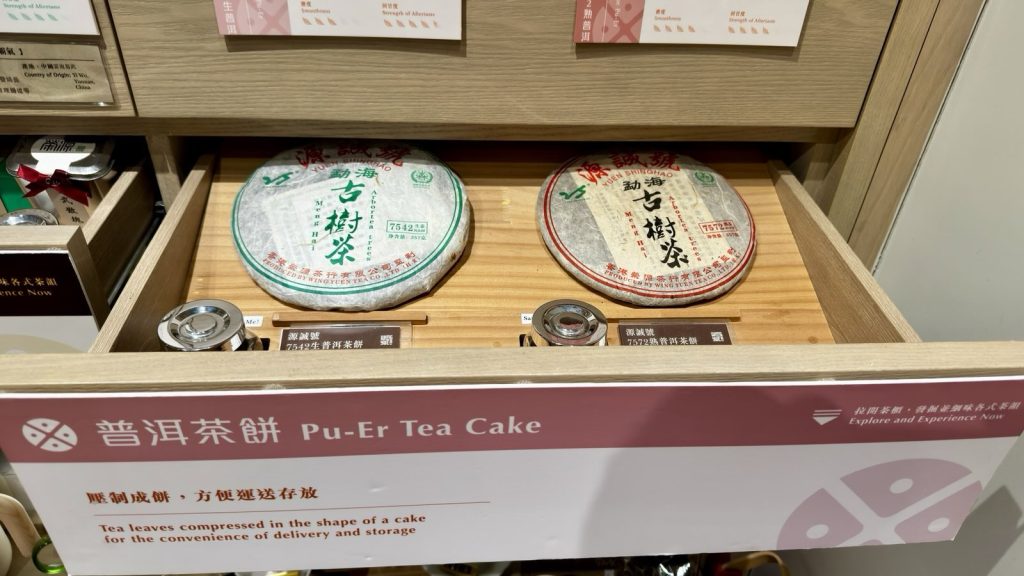
While they were in the neighbourhood, there were several other smart wins they could have picked up. PMQ itself has a tea shop inside, and Hollywood Road, Peel Street and the surrounding lanes are dotted with excellent tea merchants – including Wing Yuen Tea House on Peel Street that would have been ideal for the 2005 tea cake.

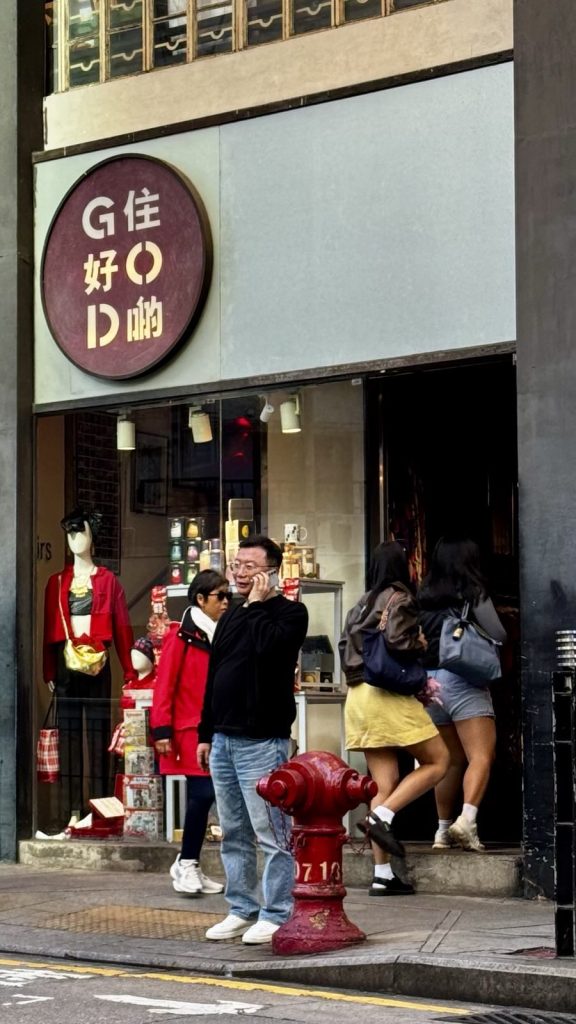
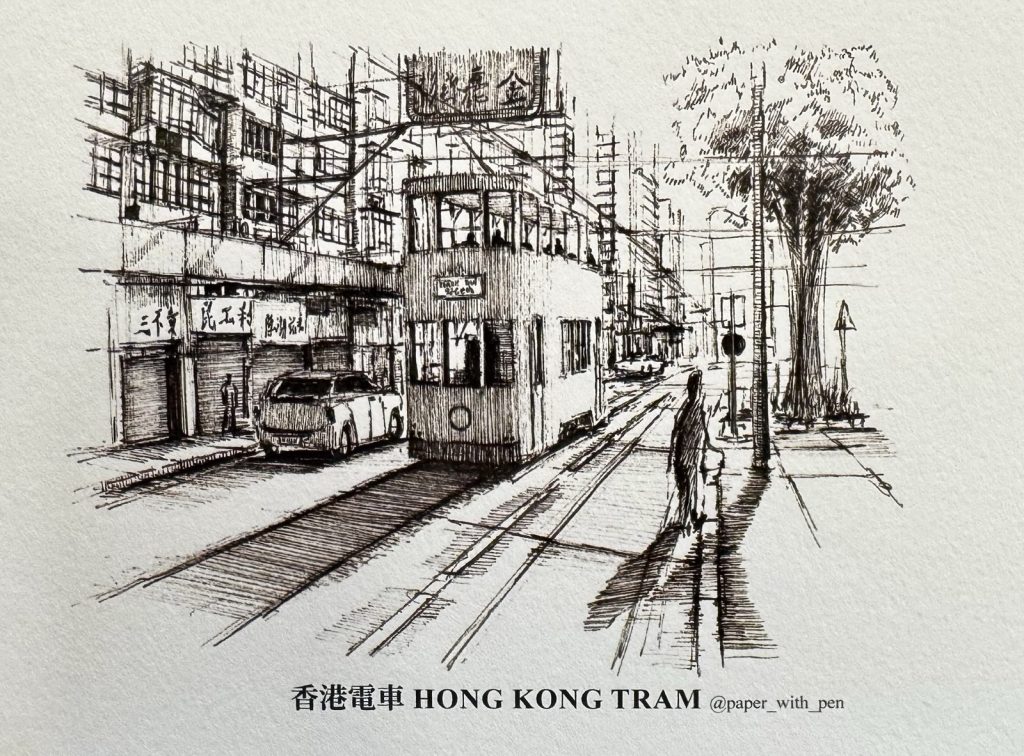
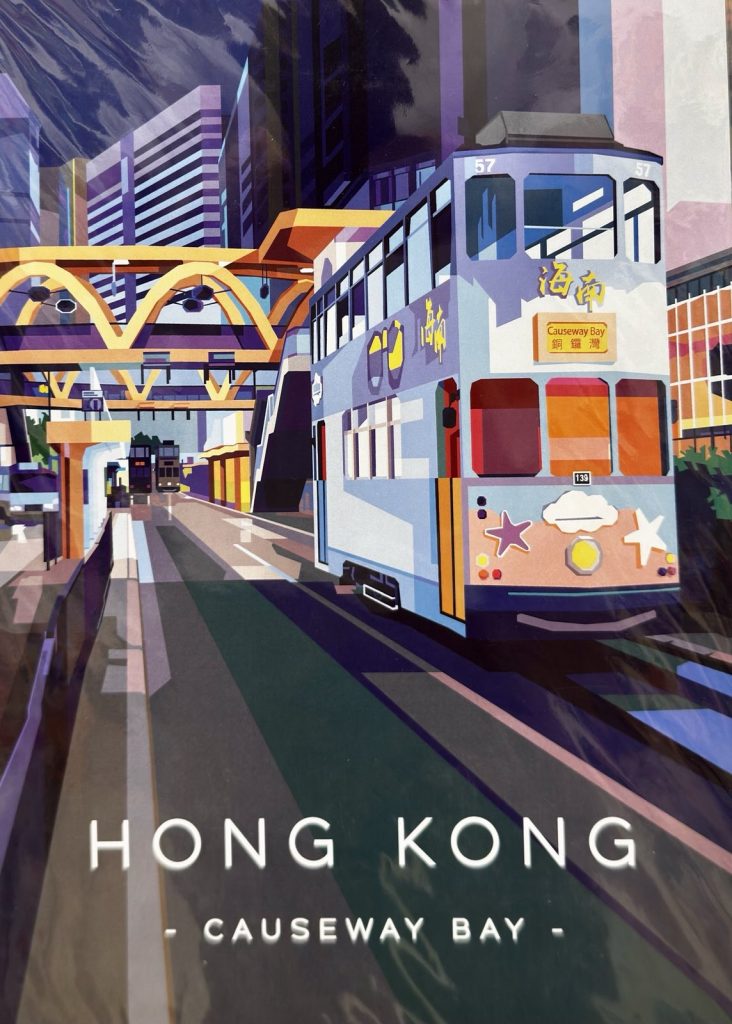
This same Central–SoHo grid would also have been perfect hunting ground for the ding ding tram illustration. Between Bookazine, Goods of Desire (G.O.D.) and Lion Rock Press, there are countless prints, cards and souvenirs celebrating Hong Kong’s beloved street scenes. We actually found a great ding ding illustration ourselves in the Bookazine on Lyndhurst Terrace – proof that, with a little local knowledge, the teams could have turned this compact area into a highly efficient one‑stop shop.
Kowloon… we think!

The boys’ team did at least head in the right direction by ducking into a stationery shop for the calligraphy brush, but came out empty‑handed. Their luck got even worse when the shop owner sold them paper from a brand called “Pineapple” – not quite the auspicious golden pineapple paper offering that was actually on the list.

Photo credit: BBC. Can we leave now? Please?

They did, however, manage to secure an erhu for around HK$475, which is an absolute steal for a traditional instrument. Because they were so pleased with the price, they didn’t want to be rude and rush the owner while he insisted on tuning it for them… very polite, very British – and very time‑consuming in the middle of an eight‑hour race.

Where we would have gone for: erhu and calligraphy brush

Yue Hwa Department Store
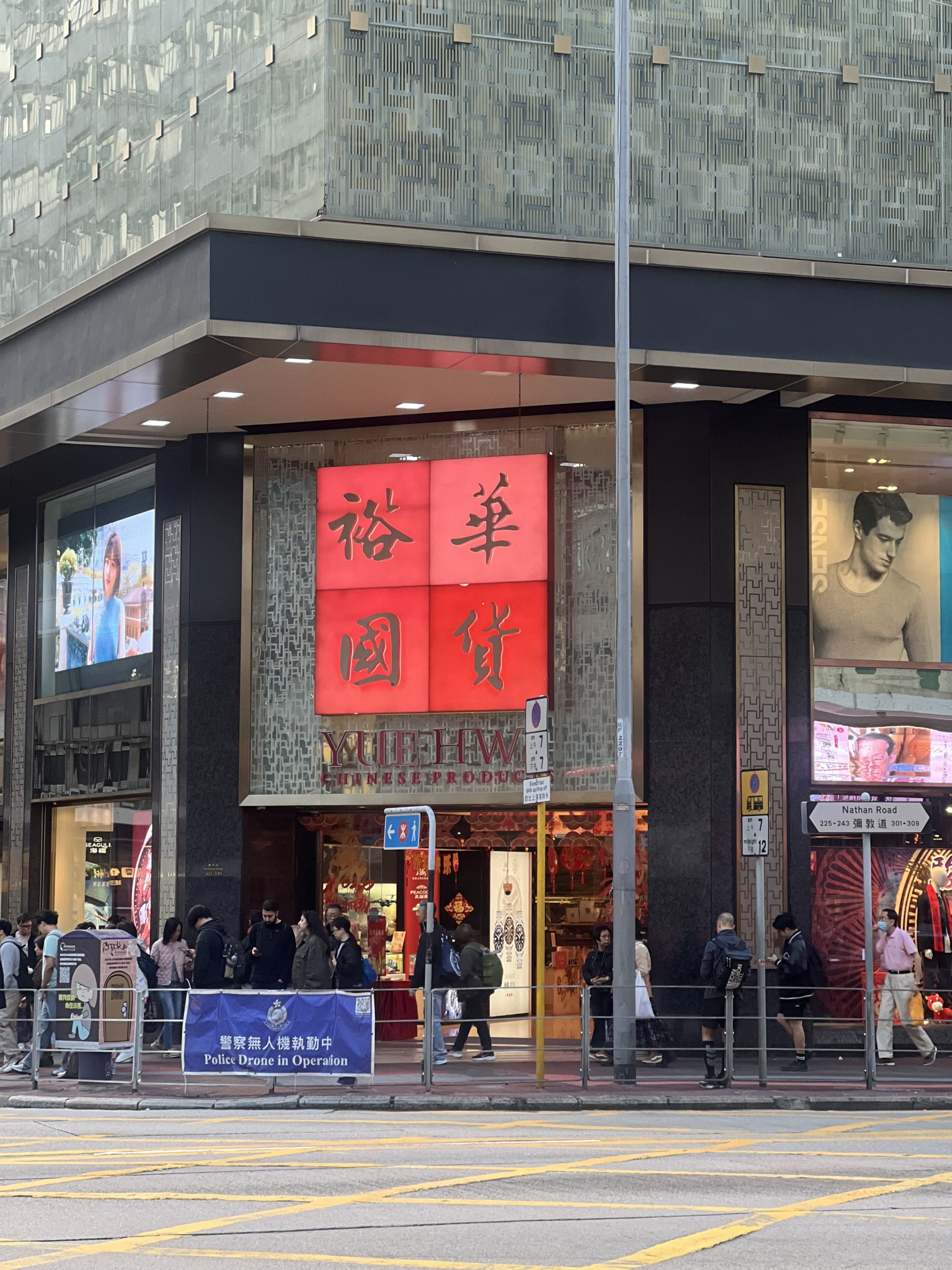
We have to admit it: on the erhu, the boys would have beaten us hands down. Our natural first stop for a Chinese instrument like that would have been the Yue Hwa Chinese Products Emporium in Kowloon, where the cheapest erhu we saw recently was around HK$2,800 – roughly five‑and‑a‑half times what the boys paid!
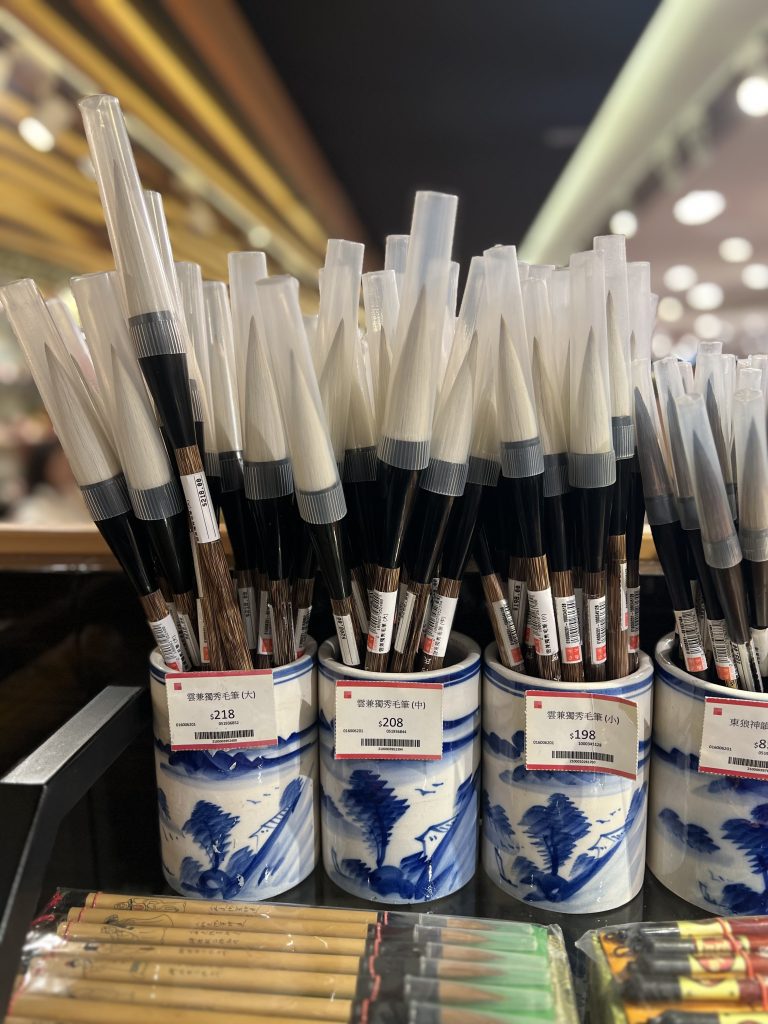
On the calligraphy brush, though, we’d have clawed back the win. Those are stocked in abundance at Yue Hwa, with perfectly good brushes starting from about HK$80. In other words, they nailed the bargain instrument, but there was a much easier (and cheaper) path to ticking off the brush.

The finish: Ngong Ping 360 cable-car and Big Buddha

The final rendezvous at the Big Buddha made for beautiful television – but as a practical end point, it was a nightmare choice.
Because half of the girls’ team managed to get themselves lost in Stanley, the other half of the team reached the meeting point just before sunset, but the rest didn’t arrive until well after dark.

You also cannot simply drive up to the Big Buddha by private car unless you have a special permit for the restricted access roads, and those licences are extremely hard to obtain. That leaves the Ngong Ping cable car as the only genuinely fast route – and that stops running around 6:00pm – so from a local point of view it was the worst possible place to finish: high risk of missing the last cable car, and almost guaranteed late arrivals if anything ran behind schedule. For anyone planning a real‑life visit, the remaining options outside cable‑car hours are bus or a pre‑arranged taxi hire, both of which take significantly longer.
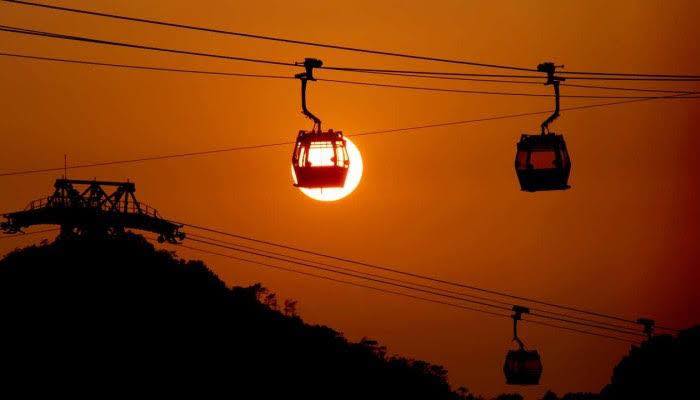
Sunset at Ngong Ping Cable Cars Tours


The one unqualified triumph of the finale was the boardroom itself. The showdown took place in Hong Kong’s newest statement skyscraper, The Henderson, which only opened at the end of 2024 and has already become a striking new landmark on the skyline.
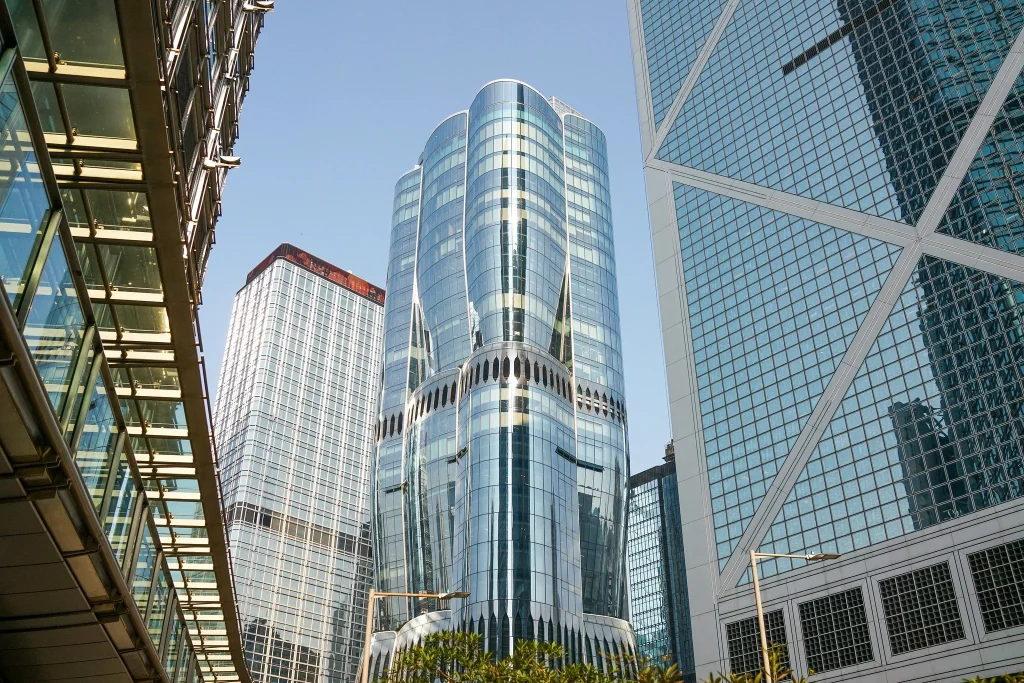
The Henderson, Central. Photo credit: J3 Tours


In the end, the numbers told their own story. The boys’ team finished with three correct items (erhu, tea cake and dragon boat head), spending HK$3,195, plus HK$38 on an incorrect purchase, for a total of HK$3,223 including transport. They failed to secure five items, picked up one fine, and had half the team arriving late at the final checkpoint, adding HK$4,040 in penalties – bringing their grand total to HK$7,273. The ladies’ team fared even worse on the scoreboard, ending up with just two correct items (mahjong set and dragon boat head) and spending HK$3,200, while missing seven items on the list. With half the team arriving over two hours late and one fine on top, they racked up HK$7,000 in penalties, taking their final total to HK$10,200 – and two of the women ultimately heard the dreaded words and were fired in the boardroom.


Harsh as the outcome was, there is at least one silver lining: every single candidate still got to experience Hong Kong up close – from markets and temples to beaches and skylines. We can only hope that, despite the stress of the task and the pressure of the cameras, they managed to enjoy even a little of what makes this city so unforgettable.
Following The Apprentice trail – their Scavenger Hunt in Hong Kong – Part 1

We couldn’t help but tune in for episode one of the brand-new season 20 of The Apprentice, where Lord Sugar sent the two opposing teams off to Hong Kong for the classic shopping task. What an incredible way for the candidates to kick off their journey – thrown straight into one of the world’s most exciting cities, with a list of tricky items and a ticking clock.

Of course, the best part for us was watching the teams try to navigate the city and hunt down their shopping list. We were literally shouting at the TV, desperate to tell them which direction to take, which vendors to ask, and which district would have saved them precious time and dollars. When you know Hong Kong well, you can’t help but think how different their day would have been.

Nine items, one city, eight hours. Could it be done? Absolutely. With the right route they could have ticked off the whole list with time to spare. Here is how we would have done it!


The Shopping List

Shrimp paste

Shrimp paste

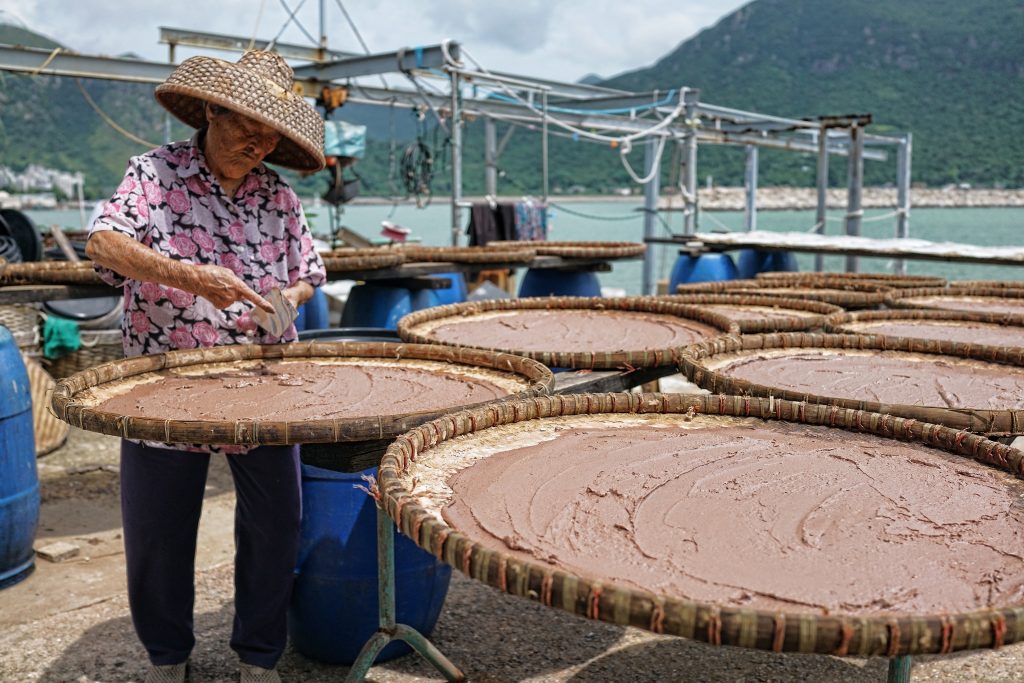
This is a paste made from only two ingredients- silver shrimp and salt, traditionally sun‑dried and ground in fishing villages like Tai O. You really don’t need to use much as it has a powerful aroma and deep salty-sea flavour. The locally made jars and dried bricks can be found in most wet markets.

Golden pineapple (paper). On screen, they clarify that the “golden pineapple” is a paper object – a symbolic tower of gold paper used in Chinese temples and festivals as offerings, not a piece note paper (read on!). The pineapple is considered to be an auspicious fruit whose name in several Chinese dialects sounds like “prosperity is coming”. In Hong Kong, these paper pineapples are burned at temples and roadside altars and offered to gods and deities for blessings of wealth, protection and good fortune.

mahjong set

Mahjong set (hand-painted)

The candidates describe mahjong as “tiny little blocks… like dominoes” and are sent to find a “hand painted” set. Culturally, mahjong is one of Hong Kong’s favourite social pastimes: families play during Lunar New Year, at wedding banquets and on typhoon‑signal days, and the clatter of tiles is a familiar soundtrack in homes and teahouses.

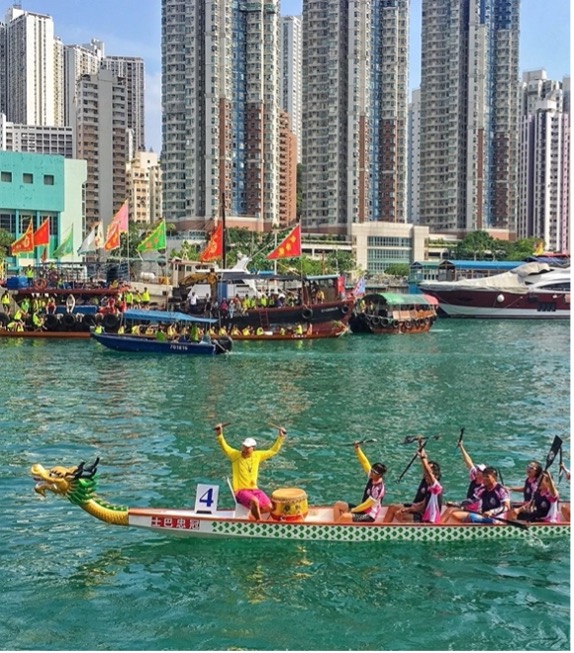
Dragon Boat Festival Races

Dragon boat head

The brief called for a dragon boat head of over one metre – not a souvenir, but the proper wooden figurehead fixed to the front of a boat. The dragon boat head is the carved and painted wooden head mounted on the prow of dragon boats, used for the Dragon Boat Festival races held each year across Hong Kong.

Erhu (two‑stringed instrument)

An erhu is a two‑stringed Chinese bowed instrument, sometimes called the “Chinese violin”. It has a small resonating body and a long neck, and produces a haunting, expressive sound that many people instantly associate with traditional Chinese music. In Hong Kong, you’ll often hear the erhu busked on street corners or featured in Chinese orchestras.

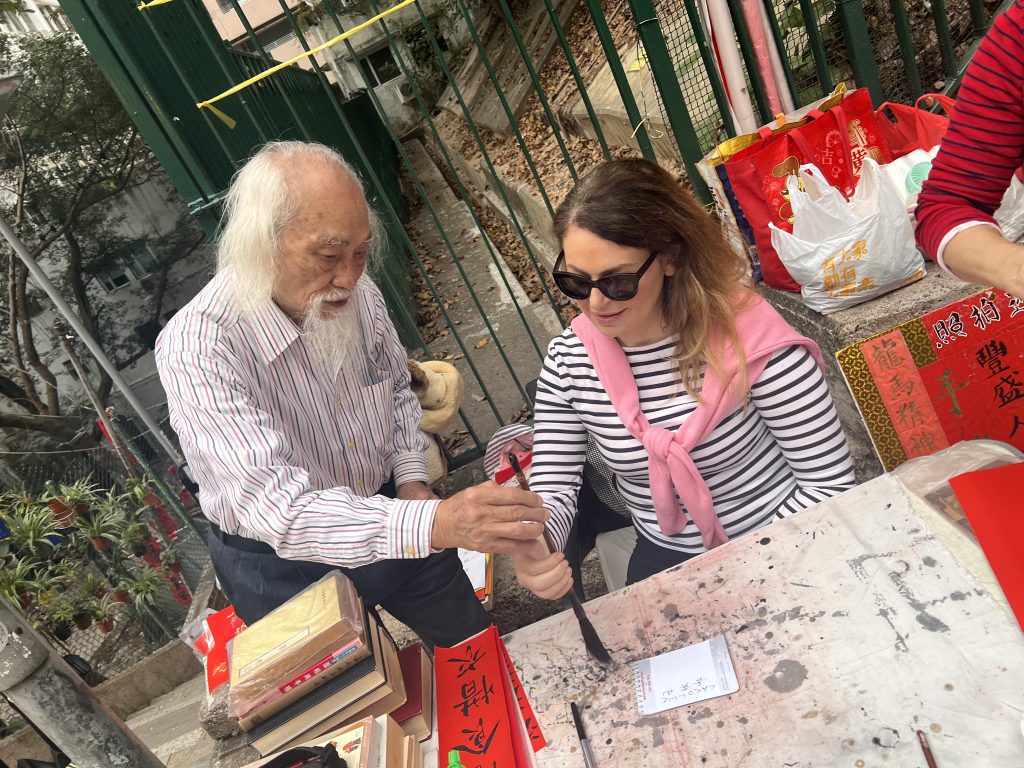
Fai Chun CNY 24

Chinese calligraphy brush (around 20 cm)

In Hong Kong, these brushes connect directly to classical Chinese culture, from schoolchildren practising characters to master calligraphers writing auspicious couplets at the Lunar New Year.

Tea cake (labelled 2005)

The briefing describes a “tea cake, labelled 2005. The “tea cake” on the list refers to a compressed disc of tea leaves, most commonly associated with aged pu’er tea. These cakes are wrapped in paper printed with the tea’s origin and year, which is why a “2005” label matters: like wine, older vintages can be more prized and more expensive. For Hong Kong, where yum cha, tea appreciation and tea trading have long histories, a tea cake isn’t just a drink – it’s a collectible piece of culinary culture that reflects time, terroir and tradition.


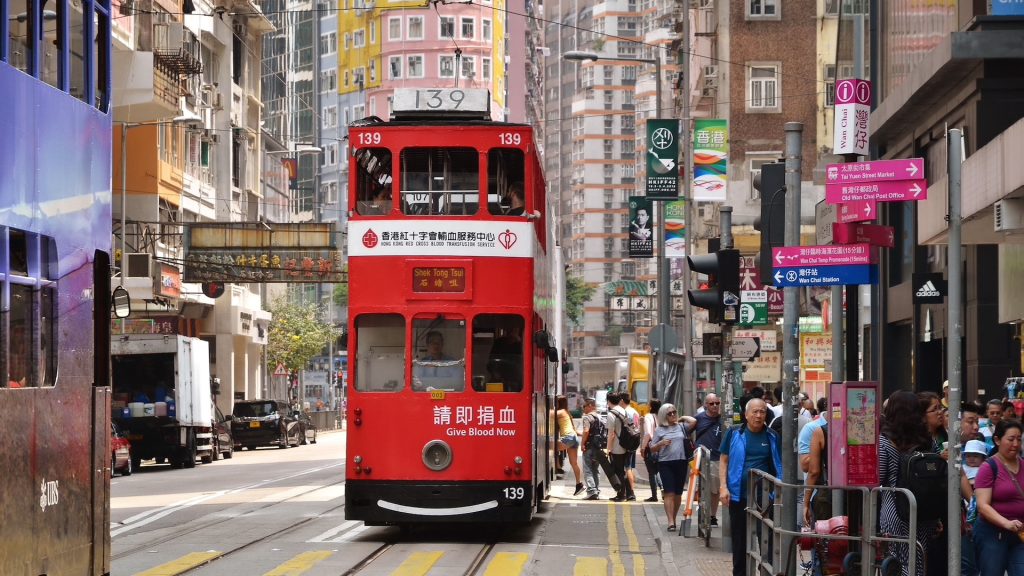
Ding ding illustration

The episode refers to a “ding ding” related item – Hong Kong’s famous double‑decker trams are nicknamed “ding ding” after the sound their bells make. An illustration of a ding ding – whether a poster, print or postcard – captures that instantly recognisable slice of Hong Kong life.

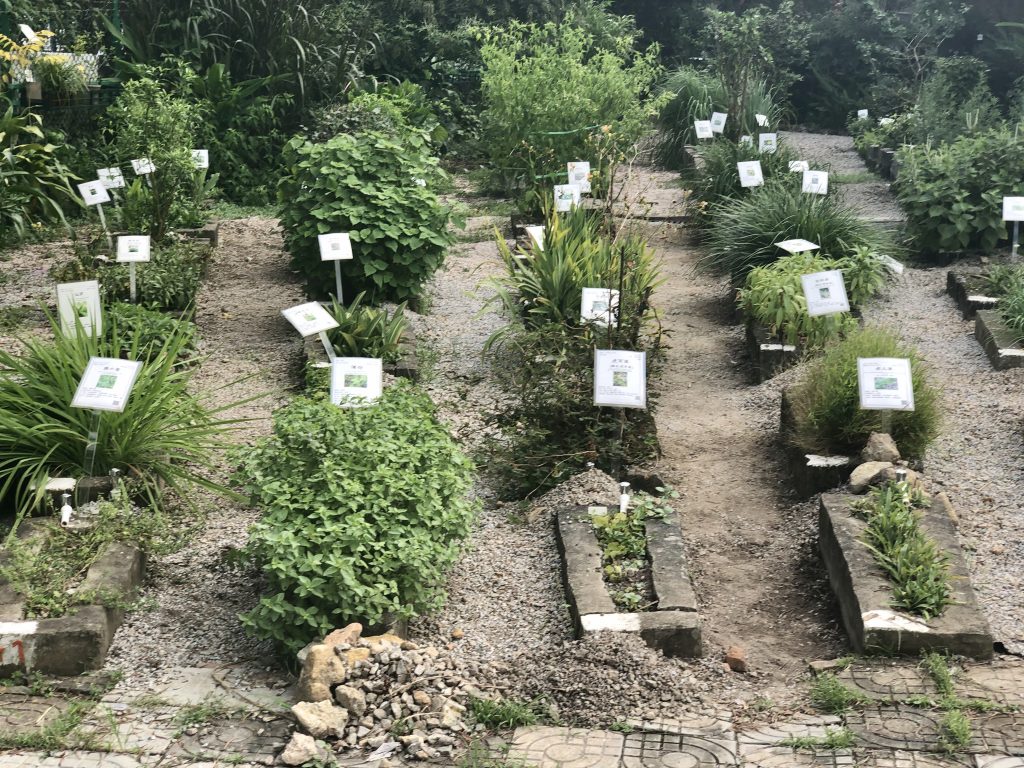
Farming Hong Kong

Baby corn – 4 catty, picked today

The teams are told to find “4 catty of baby corn, picked today”, and one lead mentions heading towards more agricultural areas. A catty (斤) is a traditional Chinese weight unit that’s still used every day in wet markets here; in Hong Kong it’s officially just over 600 grams, around 604–605 grams per catty. That means four catty of baby corn is roughly 2.4 kilograms – a serious amount of veg for one shopping list. There are of course farms in the New Territories, but we think there was a definite chance to find in the required amount early on in any of the local wet markets.


Read on to Part 2 to see our analysis of where the teams went…


Celebrating the Year of the Horse in Hong Kong


The spirit of the Horse and Lunar New Year

The Horse in the Chinese zodiac symbolises speed, vitality and freedom, and years ruled by this sign are seen as full of possibility and momentum. People born in Horse years are often described as sociable, adventurous and independent – the friends who rally everyone together, book the trip and somehow squeeze three experiences into one afternoon. That same spirited energy runs right through Hong Kong during Lunar New Year, when the city comes alive with colour, incense, flowers and food.


A festival born from legend and the farming calendar

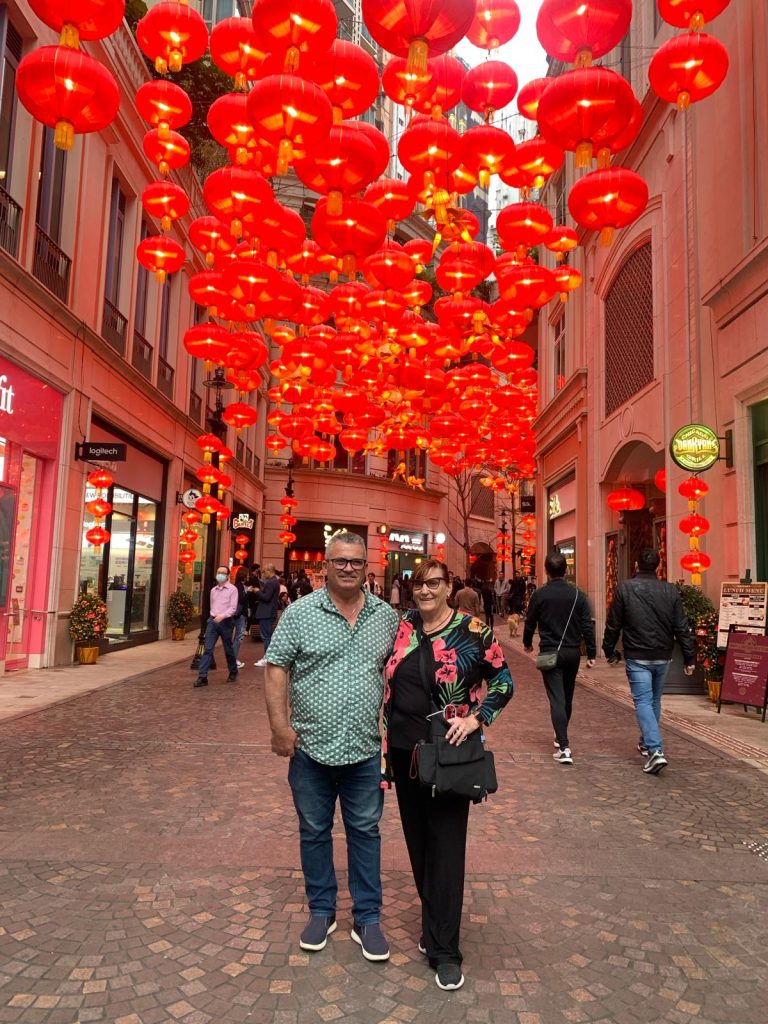
Lee Tung Avenue Feb 24

Chinese New Year, or Spring Festival, goes back thousands of years to agricultural communities marking the end of winter and the start of a new growing season. Over time, these practical rhythms became wrapped in legend – most famously the story of “Nian”, a mythical beast frightened away by loud noises, bright red decorations and firecrackers.

Those same elements live on in Hong Kong today in the form of red lanterns, spring couplets on doorways, incense, drums and lion dances in the streets – all meant to sweep out bad luck and invite in a fresh start.

In a Horse year, that sense of renewal feels even stronger, because the Horse is associated with movement, freedom and charging confidently into the future.


Is Chinese New Year a good time to visit Hong Kong?

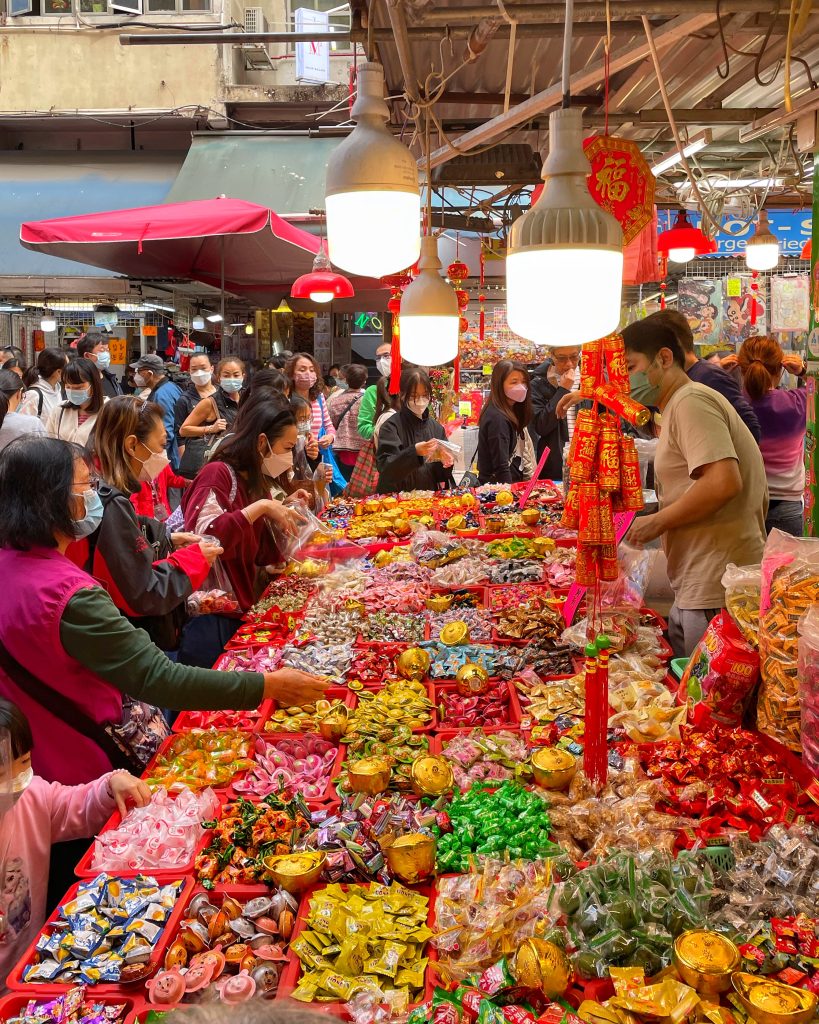
Fai Chun CNY 24

In a word, no. Among all the festivals on the Hong Kong calendar, Chinese New Year is the one that truly stops the city. Families meet up for reunion dinners, businesses close, and the usual bustle of the city gives way to family time at home, temple trips and lots and lots of meals.

Whilst there are things to do like the Lunar New Year Parade on the first day of the holiday, and the 23-minute firework display on the harbour on the second day… other than this visitors who don’t have family connections may be disappointed. Our recommendation is to visit the week BEFORE Chinese New Year to experience the excitement ahead of the actual dates such as the flower markets, street calligraphers letting you make your own meaningful banners (fai chun), and markets full of red and gold decorations.


Soak up the pre‑New Year buzz in old Hong Kong streets

In the weeks leading up to Lunar New Year, traditional neighbourhoods transform into living shopping lists of festive essentials. Wander through markets piled high with tangerines, melon seeds and towering boxes of cookies, and you’ll see why locals spend so much time preparing – it’s as much about the atmosphere as the snacks.

This is the perfect time to join our Lunar New Year Shopping Tour in Causeway Bay and let our excellent partner @explore_hongkong tell you what all the foods, flowers and lucky decorations really mean. You’ll learn why kumquats symbolise “gold”, how to choose the right couplets for your door, and which treats every Hong Kong family stocks up on before the big day.


Visit temples for Horse‑worthy good luck

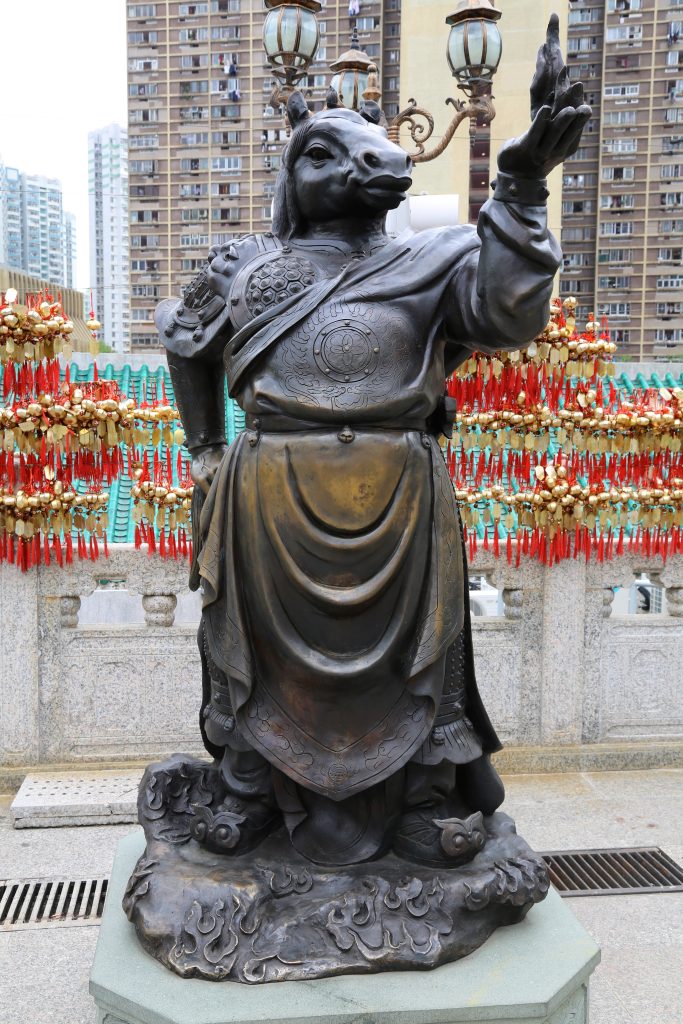
Wong Tai Sin Horse Zodiac

No Lunar New Year in Hong Kong is complete without a temple visit. Locals head to Man Mo, Wong Tai Sin and other temples to burn incense, thank the gods for the past year and ask for blessings in the one to come.

During the Year of the Horse, many people will focus on wishes related to career moves, travel and bold personal changes – all themes connected with the Horse’s dynamic spirit. Join our one of our private tours to watch fortune sticks being shaken, see how locals make offerings, and learn the etiquette so you can participate respectfully.

If this is your year, be sure to make a special offering at the Wong Tai Sin Temple to ensure that everything runs smoothly for you!


From temples to track: the Jockey Club’s CNY Raceday

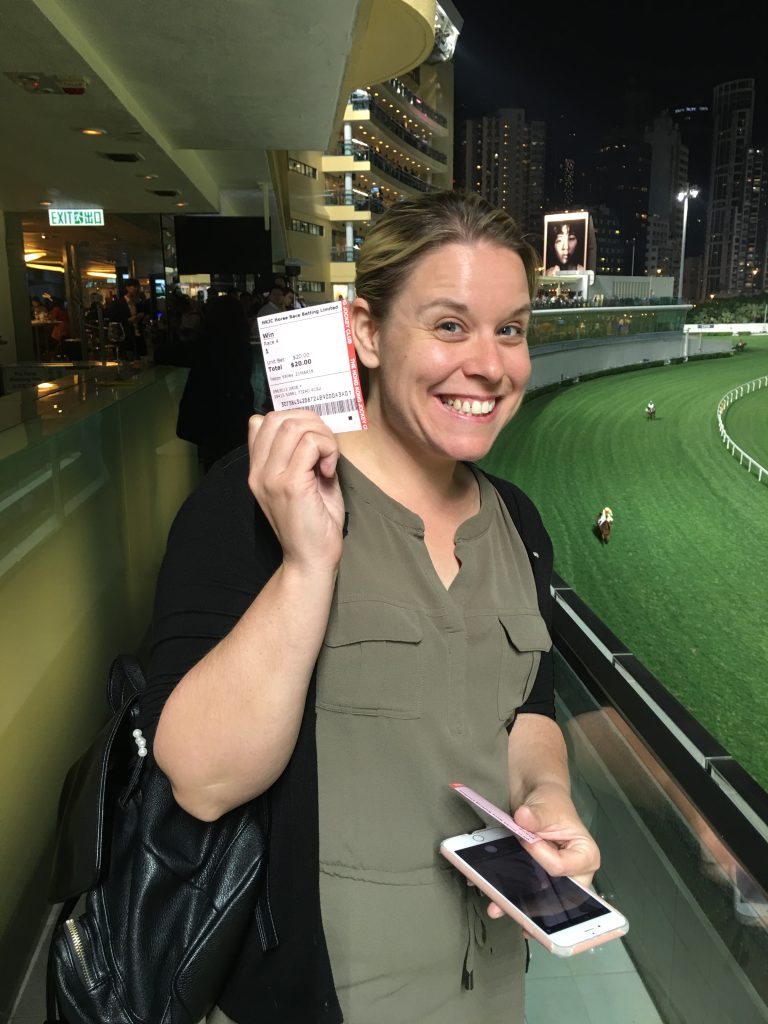
HKJC winnings

While placing a bet is part of the tradition for many Hongkongers, the whole event is really about “trying your luck” for the year ahead, enjoying the festival atmosphere and soaking up another facet of local culture. At Hong Kong Greeters we don’t advocate gambling, but we love helping guests understand why an afternoon at the races – complete with drums, lion dances and New Year decorations – sits right alongside flower markets and temple visits in the local CNY playbook.

One very Hong Kong expression of New Year optimism is Chinese New Year Raceday at Sha Tin Racecourse, organised by the Hong Kong Jockey Club.

Ask us if you would like to include this visit in one of your tours, because as an overseas visitor, there are also special areas to take advantage of that only you can access!


Bring Horse energy into your own year

Whether you’re a Horse yourself or just borrowing its bold energy for the year, Hong Kong is an inspiring place to set your intentions for the months ahead. Between temple visits, harbour views and shared meals, you’ll have plenty of moments to pause, reflect and decide what you want your “gallop” through the year to look like. 恭喜發財 (gung hei faat coi) or Happy Chinese New Year!!

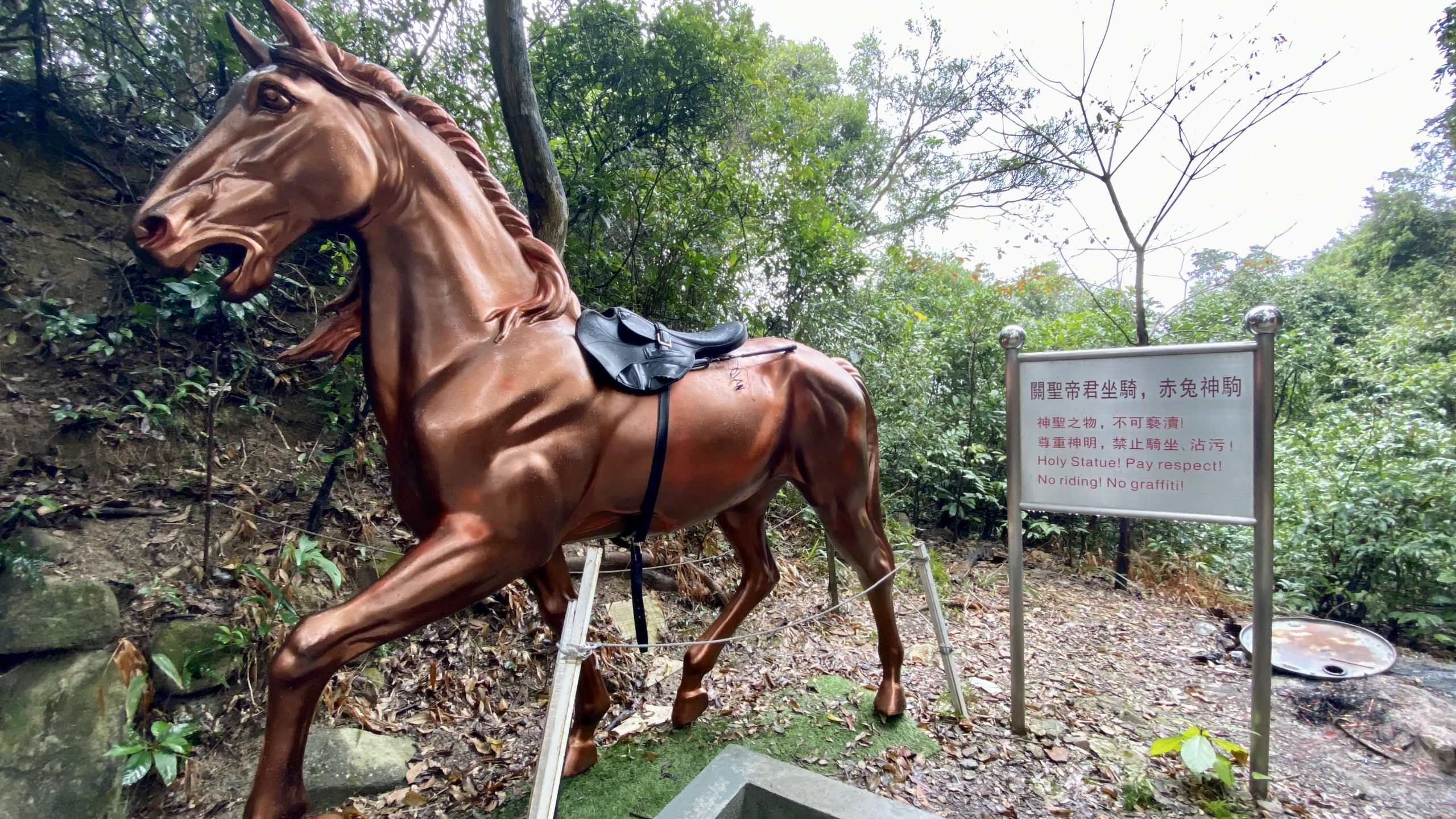
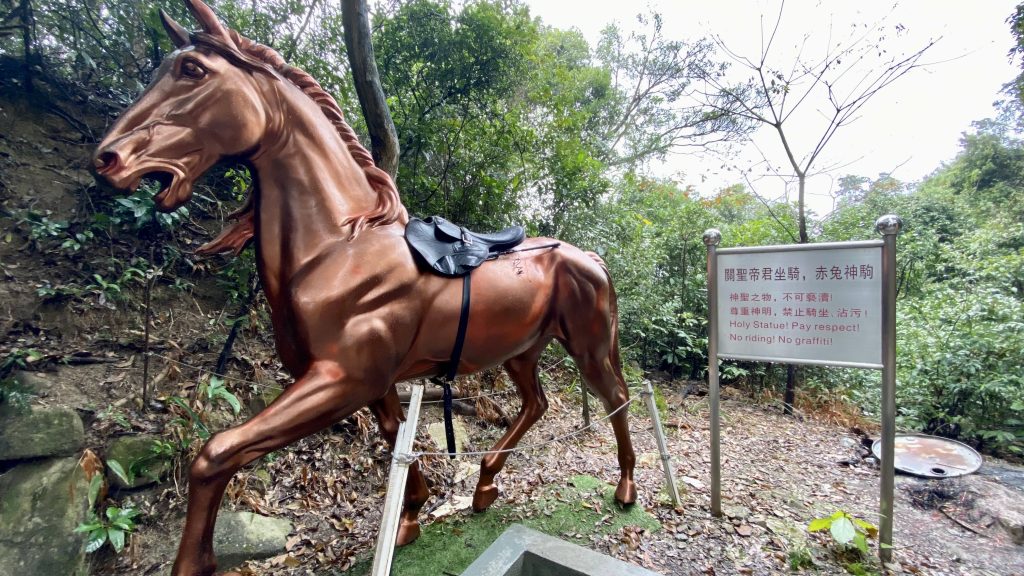
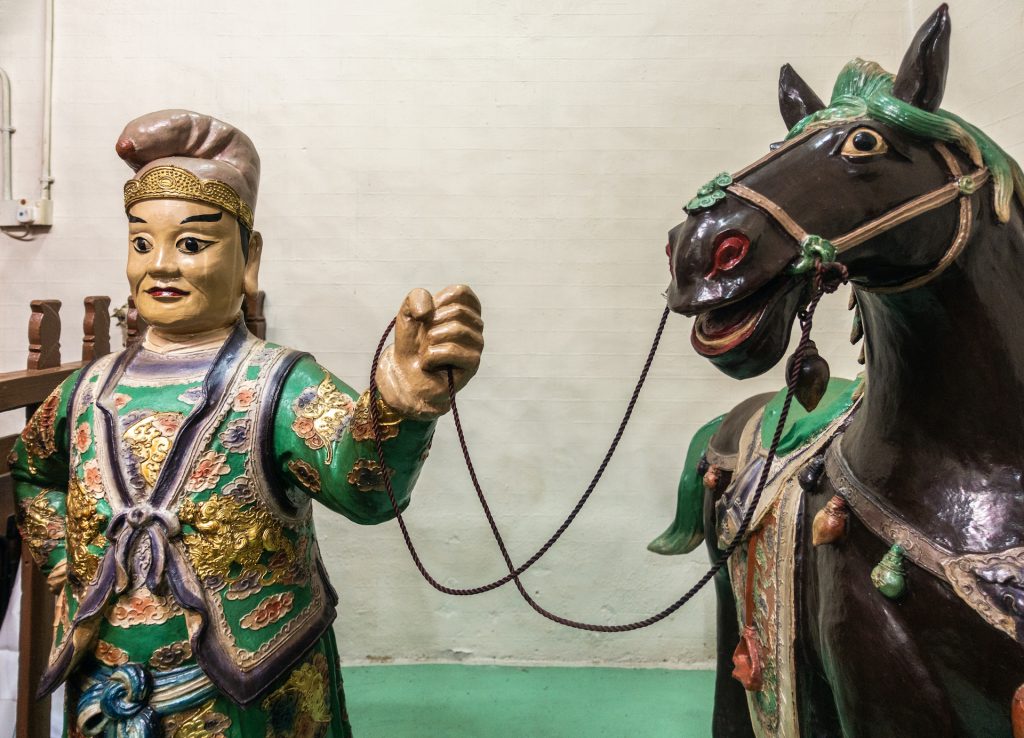
Kwan Tai Temple Horse

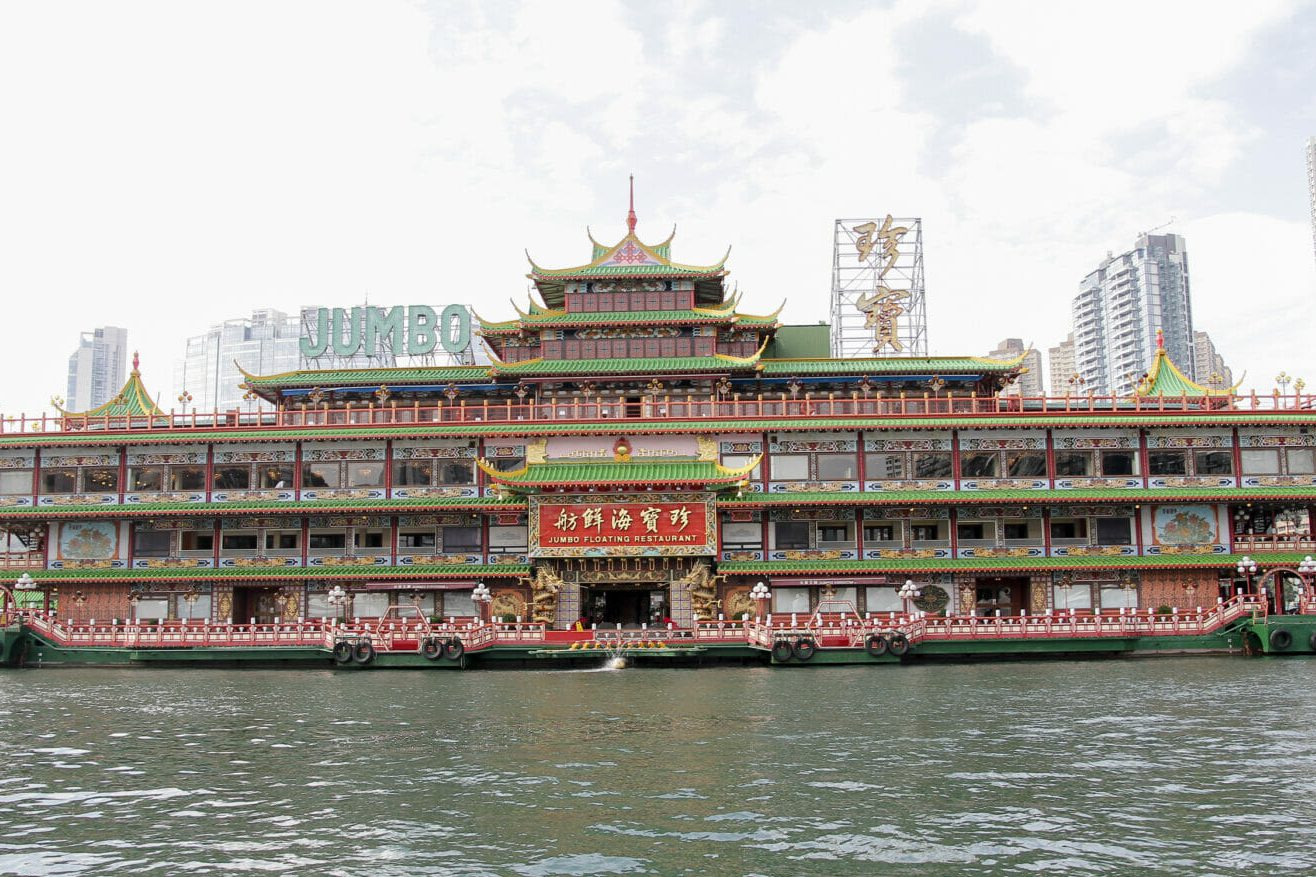
What really happened to Hong Kong’s Jumbo Floating Restaurant?

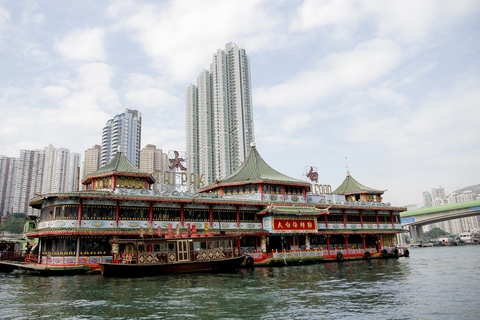
jumbo restaurant hong kong wedding venue


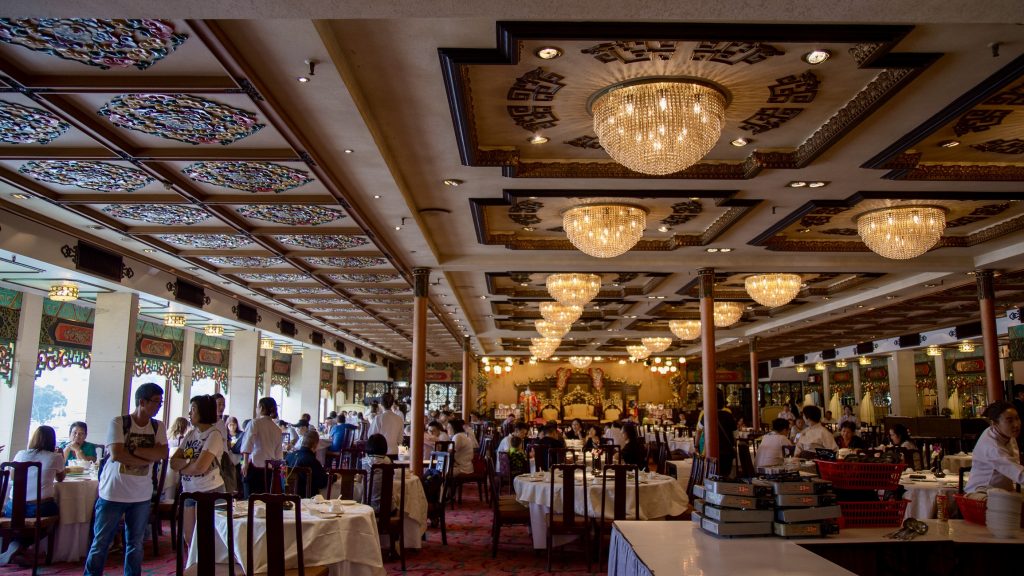
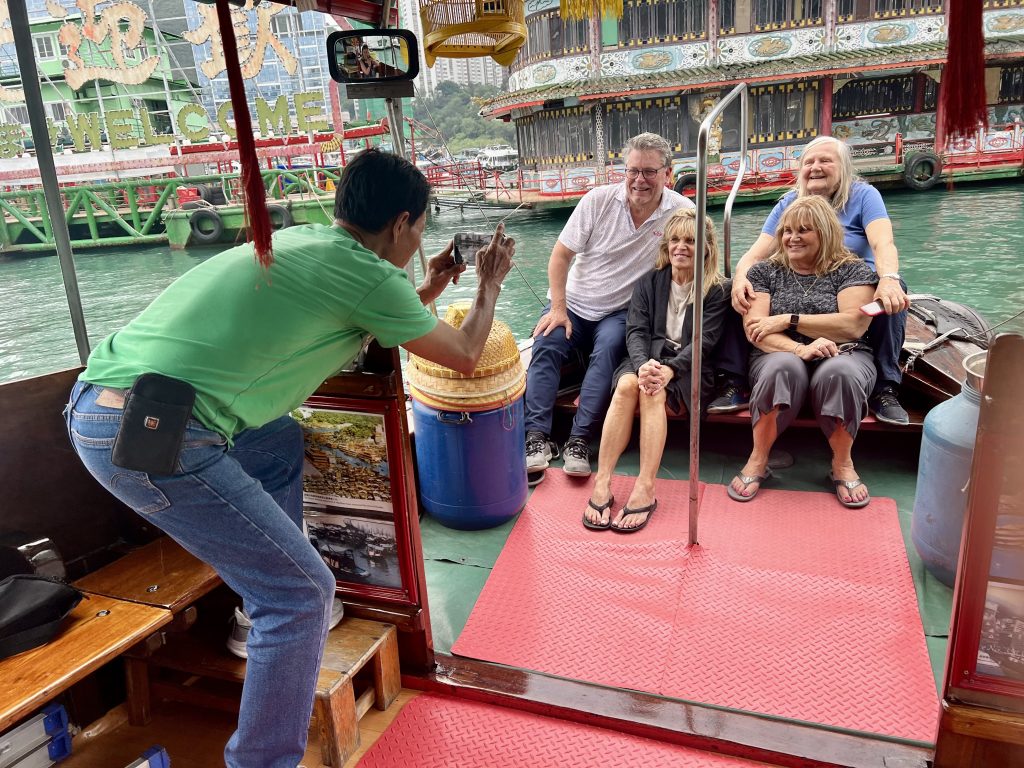
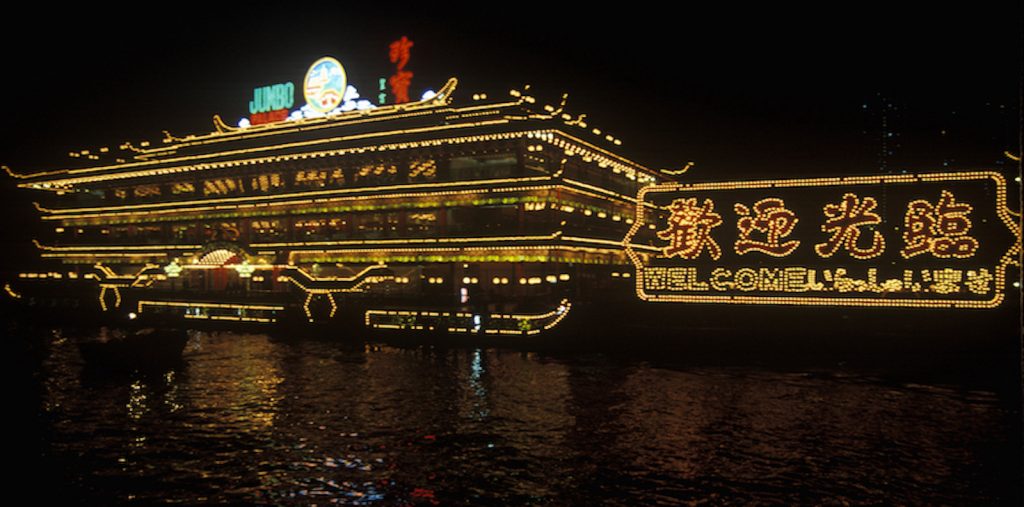
Hong Kong’s Jumbo Floating Restaurant began life as a symbol of prosperity and spectacle in the 1970s and ended with a mysterious capsizing in the South China Sea in 2022, while under tow to an undisclosed new home (rumoured to be Cambodia). For decades it was a near‑mandatory stop on Western visitors’ itineraries, a place to try Cantonese banquets, be handed chopsticks for the first time (with knives and forks quietly available), and soak up a fantasy of imperial China against the very real backdrop of Aberdeen’s fishing community.

From fishermen’s barges to a “floating palace”

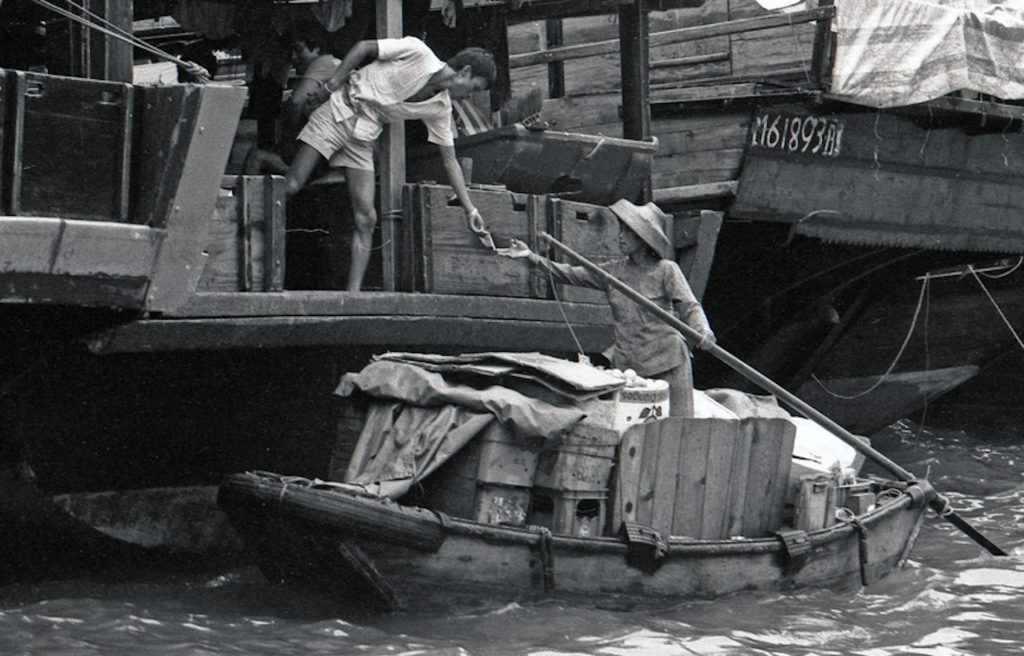
Floating restaurants in Aberdeen grew out of fishermen’s barges from the Pearl River Delta, where people added simple stages and kitchens so fishing families could host banquets, sing, and socialise without going ashore. In the 1920s–30s, Hong Kong fishermen began operating similar boats, at first serving only the fishing community, then gradually opening to city dwellers and tourists as word spread about fresh seafood eaten right above the water where it was caught.

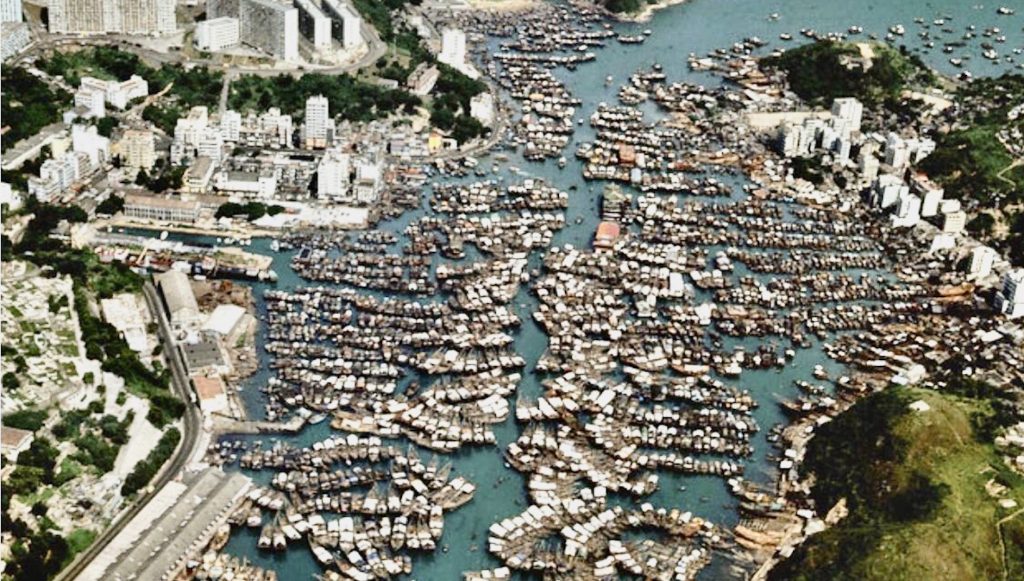
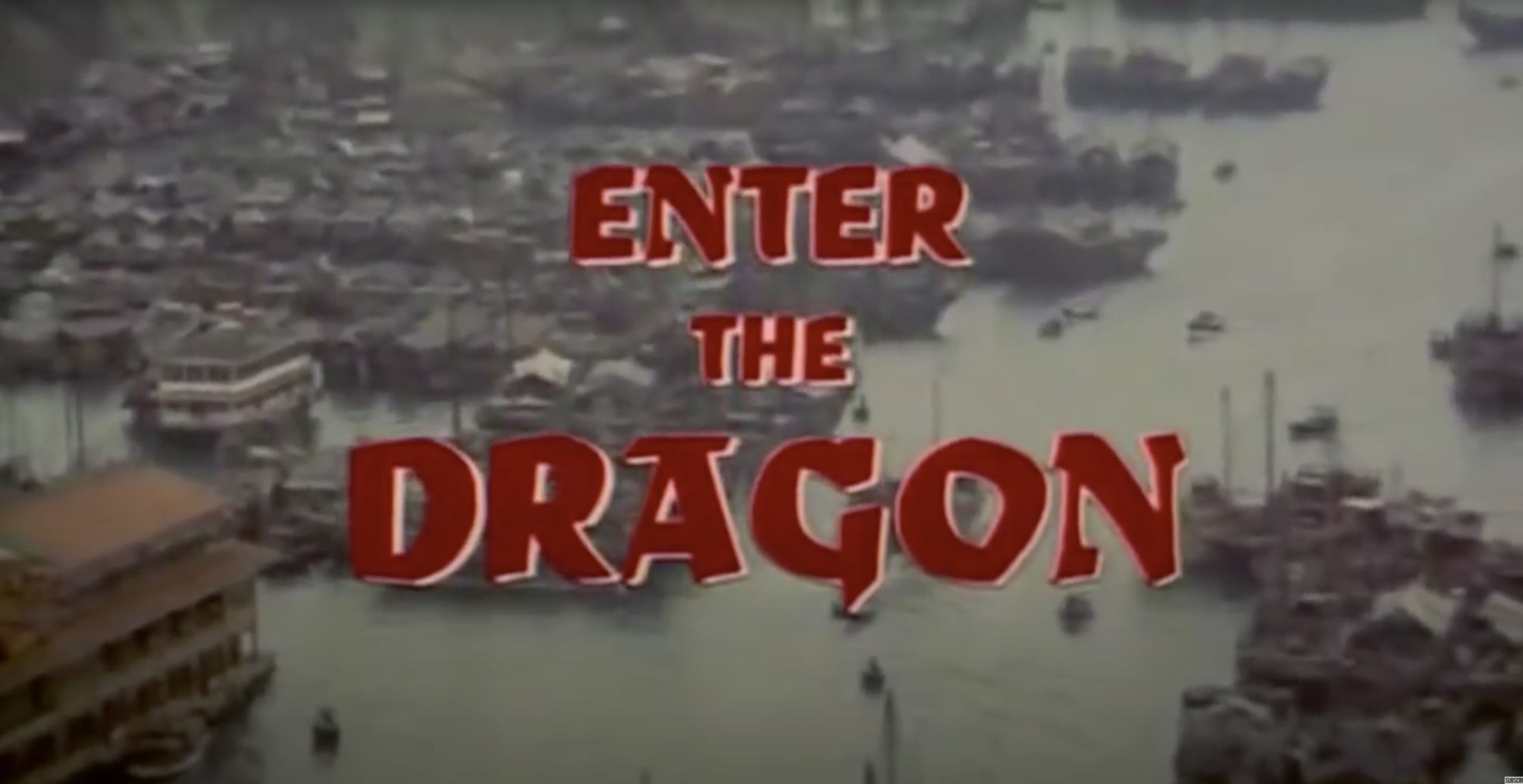
Aberdeen Aerial View circa 1960

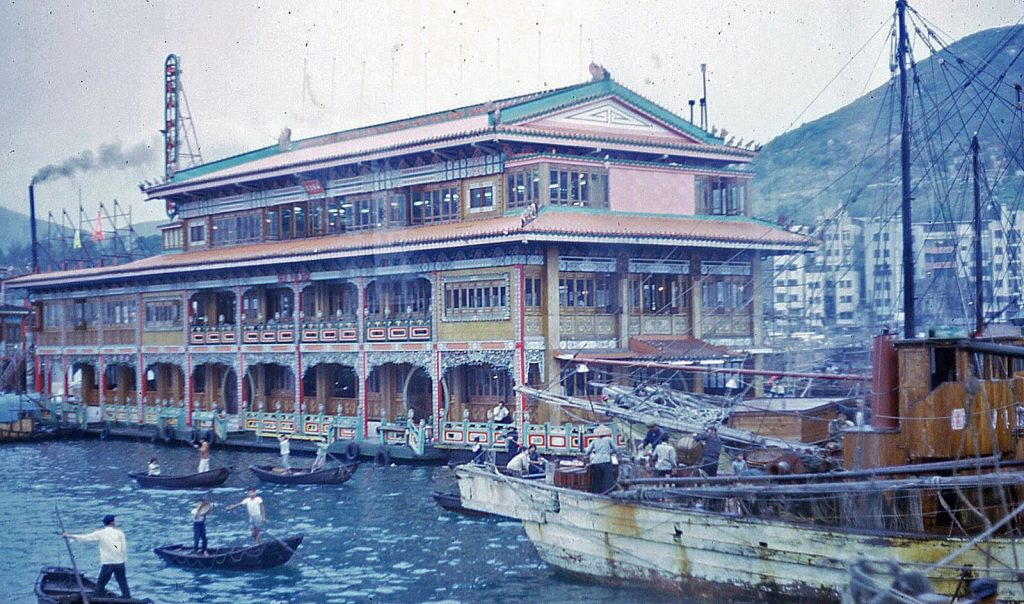
By 1952, the Tai Pak Floating Restaurant was operating at Aberdeen, eventually seating hundreds and helping establish the idea that eating afloat, among moored junks and sampans, was part of “real Hong Kong.” These restaurants offered both an accessible luxury for locals celebrating weddings and banquets and an exotic, lantern‑lit world that early Western visitors felt they “had” to experience when Asia was still a long-haul, once‑in‑a‑lifetime trip.

Tai Pak Restaurant Aberdeen group tour

Building Jumbo – fire, rebirth, and VIP guests

In the early 1970s, herbal tea magnate Wong Lo‑kat decided to outdo Tai Pak with a vast new floating palace called Jumbo, built at Kowloon Chung Hwa shipyard for around HK$14 million and decorated like a Qing‑style imperial palace. Before it could open, a welding spark triggered a catastrophic four‑alarm fire on 30 October 1971, destroying the nearly finished structure and killing 34 people while injuring dozens more, a tragedy that forced a complete rebuild.

Macau casino tycoon Stanley Ho stepped in, bought the project in 1972, and poured roughly HK$30 million into a new Jumbo, which finally opened to the public on 19 October 1976 and would later be grouped with Tai Pak and Sea Palace under the “Jumbo Kingdom” banner. In its heyday, Jumbo hosted royalty and celebrities; among the most famous visitors was Queen Elizabeth II, who dined there during an official visit, helping cement its image as the place to go in Hong Kong for a showpiece Cantonese seafood banquet.

Tourists: Movies and Instagramable Moments!

From the late 1970s through the 1990s, Jumbo became a must‑do for Western visitors, especially when travel to mainland China was still restricted and Hong Kong acted as a “South Gate of China.” Tour groups would pile into sampans or tour boats, step onto the dragon‑guarded gangway, and be ushered into vast banquet halls where, for many guests, this was their very first encounter with live seafood tanks, dim sum trolleys, and the slightly daunting gift of chopsticks placed at each setting.

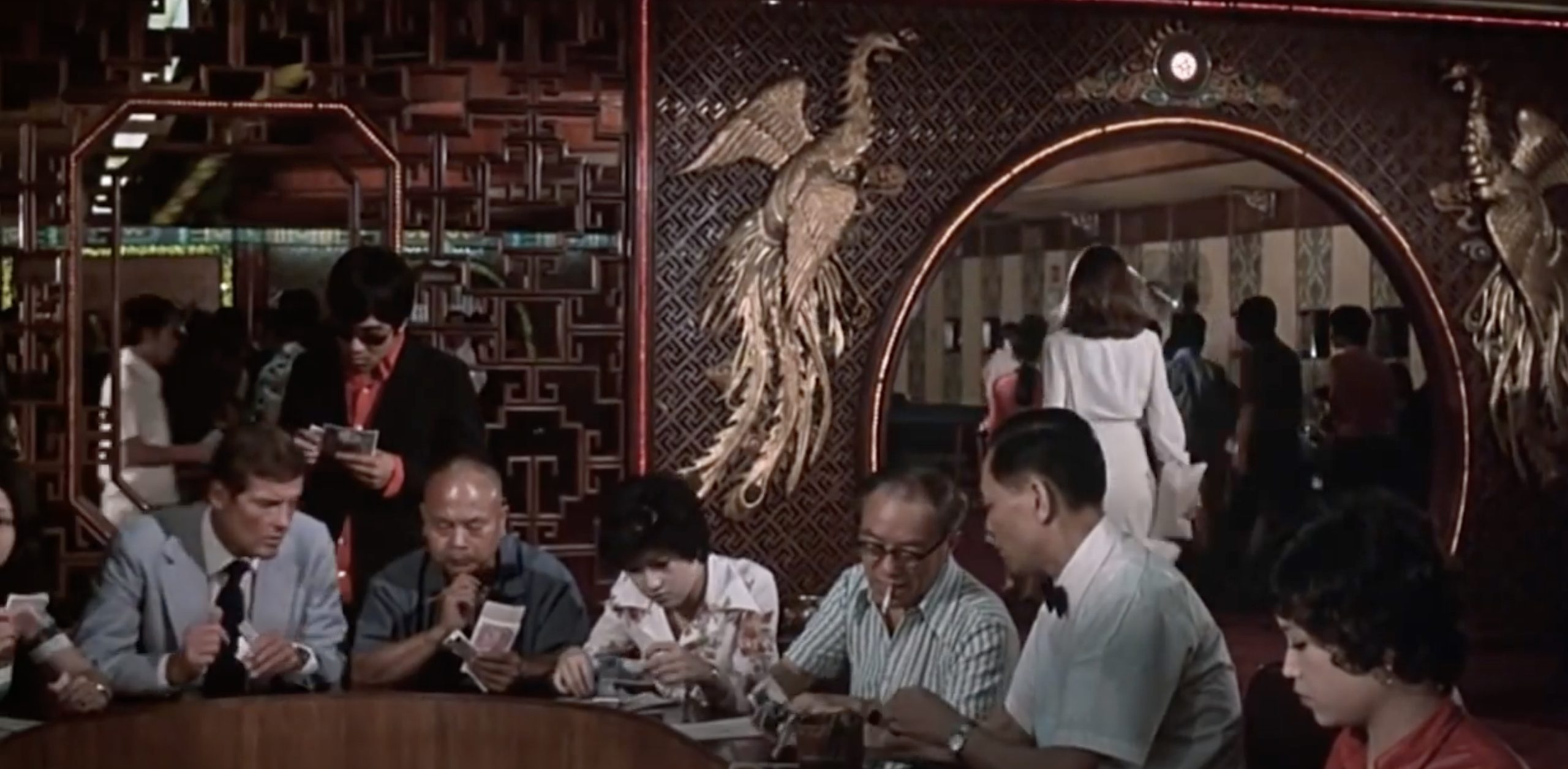
Jumbo’s theatrical interiors—golden dragons, carved wood, and bright neon—made it a natural film location. It appears (or is strongly associated) in:

  • Bruce Lee’s “Enter the Dragon” (1973), which uses Aberdeen’s floating restaurants as part of its Hong Kong sequences.
  • The James Bond film “The Man With the Golden Gun” (1974), widely cited as featuring Jumbo or its sister floating palace, reinforcing its bond with the 007 mythos.
  • Steven Soderbergh’s “Contagion” (2011), in which modern Hong Kong stands in for a global outbreak’s origin, with Jumbo providing a visually iconic backdrop.
  • Man With The Golden Gun Floating Restaurant

Decline, closure, and the South China Sea

Despite surviving the Asian financial crisis and later global downturns, Jumbo struggled in the 2000s as tastes shifted and operating costs rose, and by the late 2010s it was no longer the guaranteed money‑spinner it once had been. The 2019 protests and then the Covid‑19 pandemic dealt the final blow; Jumbo ceased operations on 3 March 2020 after posting years of losses, and its long‑time backer Stanley Ho passed away shortly afterwards in May 2020.

Jumbo Floating Restaurant at Night

In June 2022, with no clear rescue plan in Hong Kong, the owners arranged for Jumbo to be towed out of Aberdeen Harbour to an undisclosed overseas yard, widely reported as somewhere in Southeast Asia. On 18 June, while passing near the Paracel (Xisha) Islands in the South China Sea, the vessel reportedly encountered “adverse conditions,” took on water, and capsized; the company initially said it had sunk in water over 1,000 metres deep, later clarifying that it had capsized and salvage would be extremely difficult, with subsequent reports indicating it ultimately sank and parts of the wreck lodged on a reef.

What’s left of Jumbo today?

Physically, the famous barge is gone from Aberdeen, but fragments of its story—and even pieces of its fabric—live on around Hong Kong.

For visitors today, the spirit of Jumbo survives in a few key ways you can point out on tour:

  • Aberdeen itself, where guides can explain the old network of floating restaurants, the fishermen’s lifestyle, and show archival photos of Jumbo Kingdom in its neon prime. To explore more and taste some authentic fisherman cuisine, we do run a monthly immersive trip to Aberdeen. Link here for more information.
  • The Central Harbourfront, near the Hong Kong Observation Wheel, where themed costume photo booths continue the tradition of “dressing up” in Chinese outfits—an echo of the old souvenir costume photos taken on Jumbo’s ornate staircases and throne chairs.
  • Pop culture: screenings of “Enter the Dragon,” “The Man With the Golden Gun,” and “Contagion,” along with local films that used Jumbo as shorthand for “Hong Kong glamour,” allow visitors to time‑travel back to when a dinner at a floating restaurant was the highlight of a first Asia trip.

Hong Kong New Year Harbour Cruise 2026

It’s that time of year again! Book now to ring in 2026 in Hong Kong on our New Year Cruise 🎉🥂!

days
hours
mins
secs

🎉 Countdown to 2026 in Style

Don’t miss out on the most extraordinary New Year’s Eve celebration Hong Kong has to offer. Secure your spot, and let’s welcome 2026 in unparalleled style! 🎆🥂

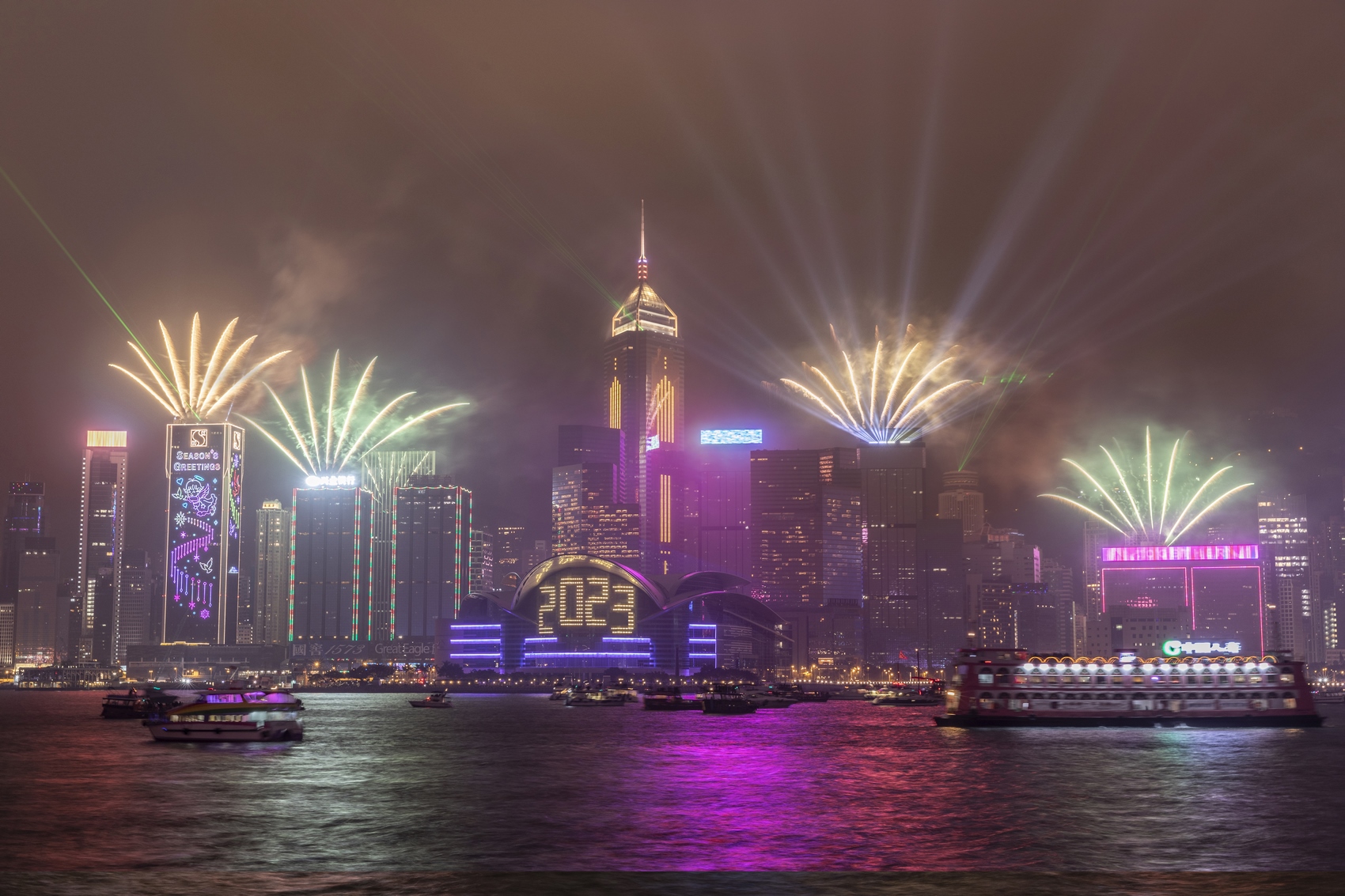
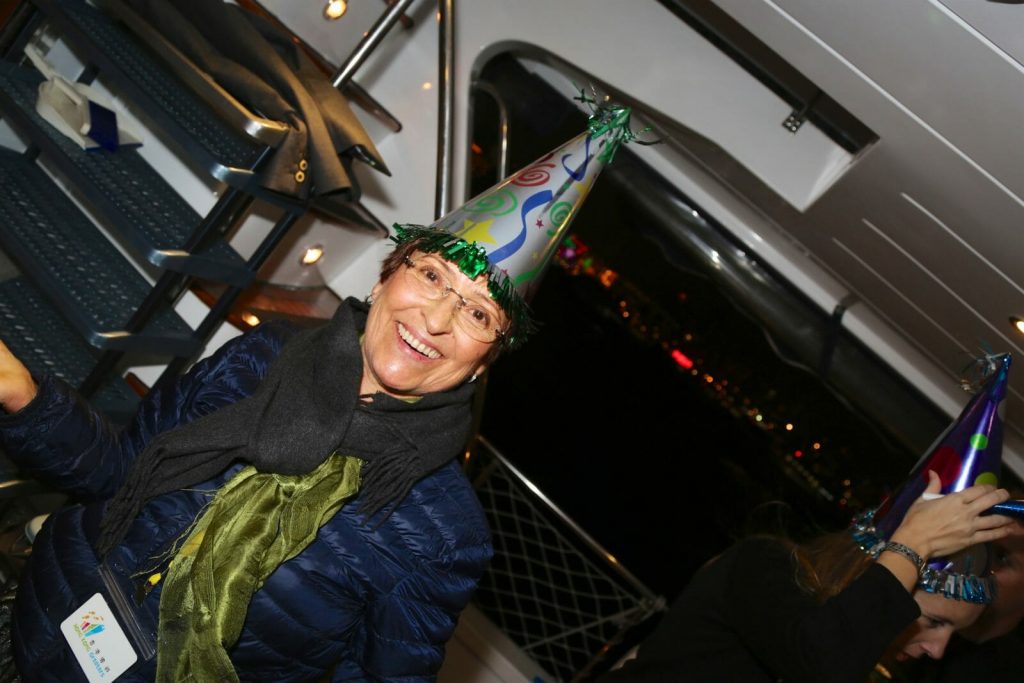
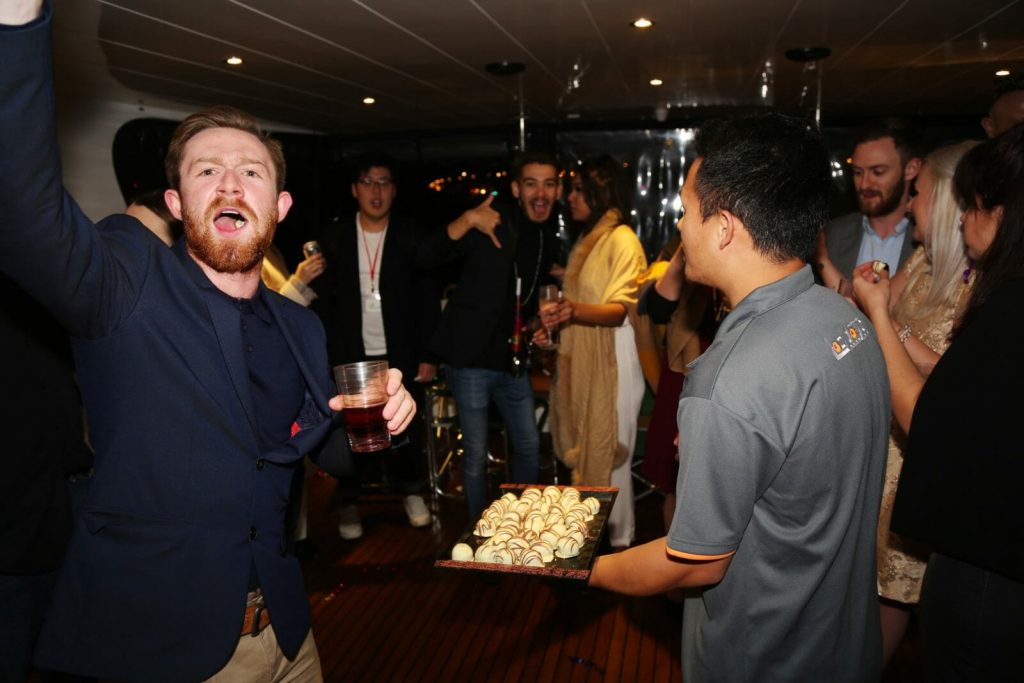
There’s no better feeling than welcoming the New Year surrounded by Hong Kong’s sparkling skyline, fireworks bursting overhead, and a boatful of people ready to celebrate. That’s exactly what our New Year’s Eve Cruise delivers, and we can’t wait to do it all over again! Ready to make memories that will last a lifetime? Secure your spot where a first-class experience awaits. This unforgettable journey is starts at HK $2,300* per person and includes the free-flow of drinks and a festive menu.

Hong Kong Fireworks Cruises Victoria Harbour

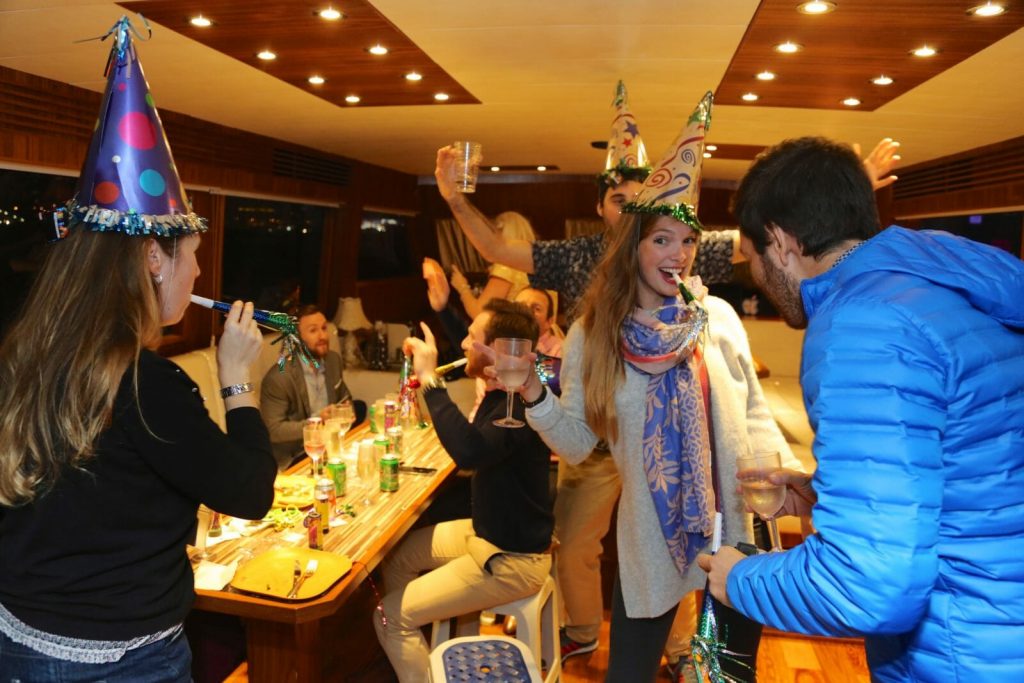
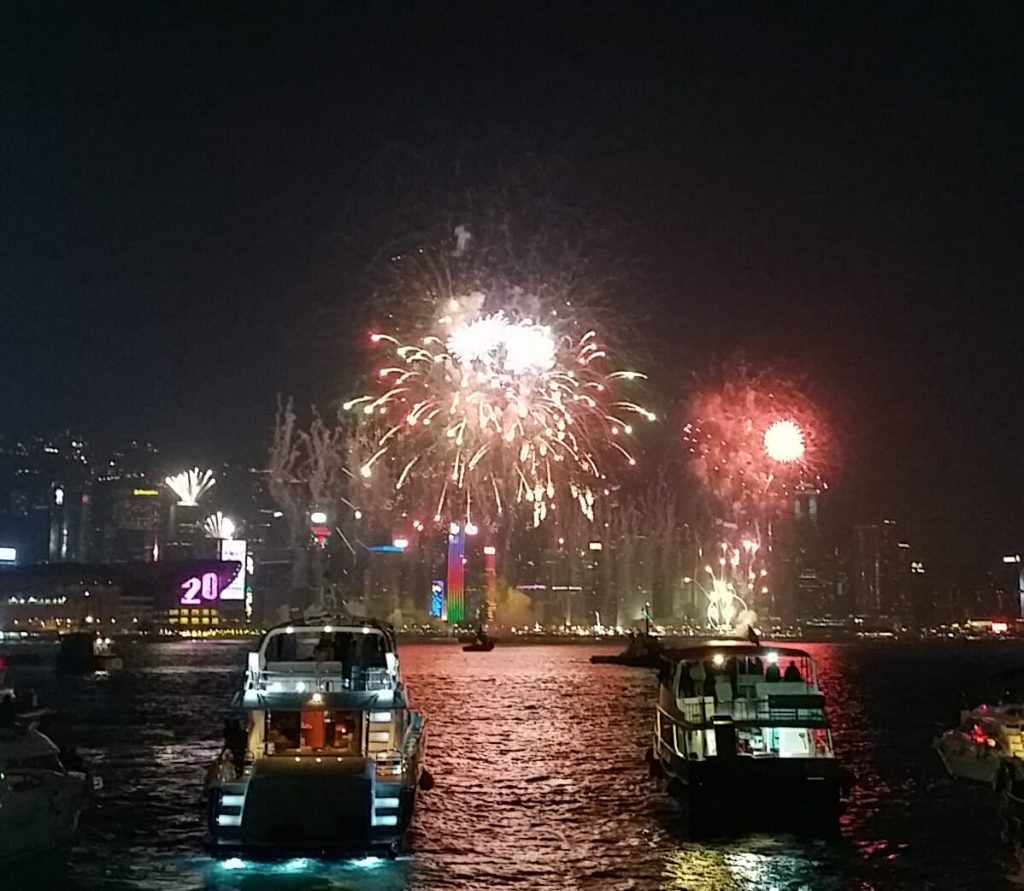
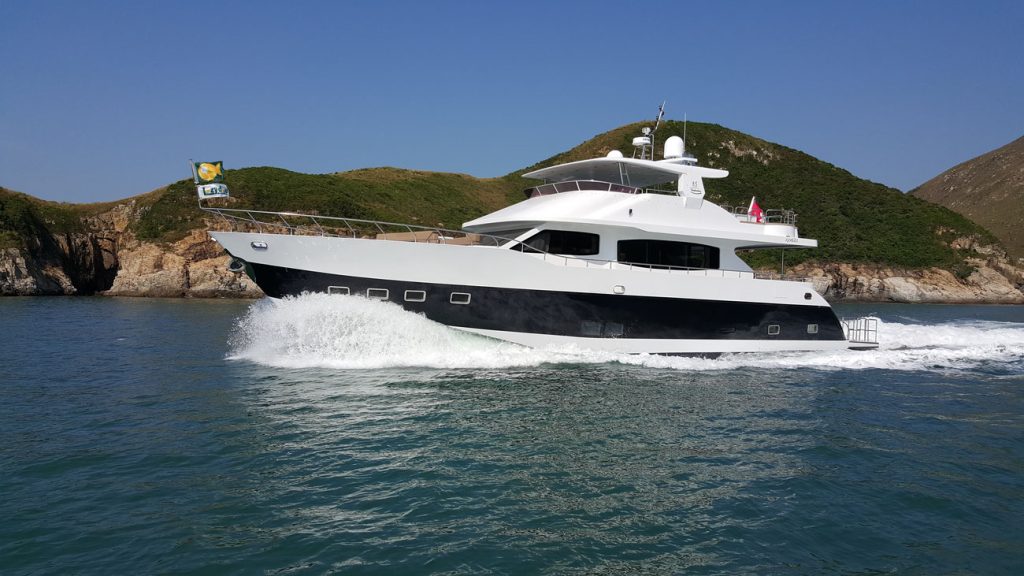
Join us for the most exclusive celebration of the year, the Hong Kong New Year’s Eve Fireworks on Victoria Harbour – guaranteed the best seats in town! Board our intimate and exclusive 70ft yacht, enjoy the open-bar hospitality, scrumptious menu, the fantastic night view and the magnificent New Year’s Eve fireworks with less than 45 people.
Fireworks Cruises Tours & New Years Parties

🥂 Raise Your Glass to Free-Flow Fun

As we set sail from Tin Hau public pier at 9:00pm, you’ll enjoy a festive appetiser menu that sets the mood for the night. But that’s not all; our open-bar hospitality ensures your glass is never empty. Sip on Prosecco, red and white wine, beer, soft drinks, juices, tea, and coffee – all included in the package. Or choose to upgrade to our Champagne cruise for an additional HK $400 to enjoy free-flow Moët and a selection of spirits with mixers.
Fireworks Cruises Tours & New Years Parties

🎇 The Best Seats in Town for Hong Kong’s New Year’s Eve Fireworks

Picture this: You, on the LazyDays Elephant, an exclusive yacht with a 45-person capacity, plenty of indoor space, and a delectable festive food and drinks menu that will leave your taste buds tingling with delight. This 4-hour free-flow voyage is your ticket to an unforgettable evening of celebration.

Fireworks Cruises Tours & New Years Parties

🌃 A Night to Remember

As the clock ticks closer to midnight, soak in the fantastic night views of Hong Kong’s iconic skyline. Feel the electric energy building up all around you as the city prepares to welcome 2025 with a bang.

Fireworks Cruise Hong Kong

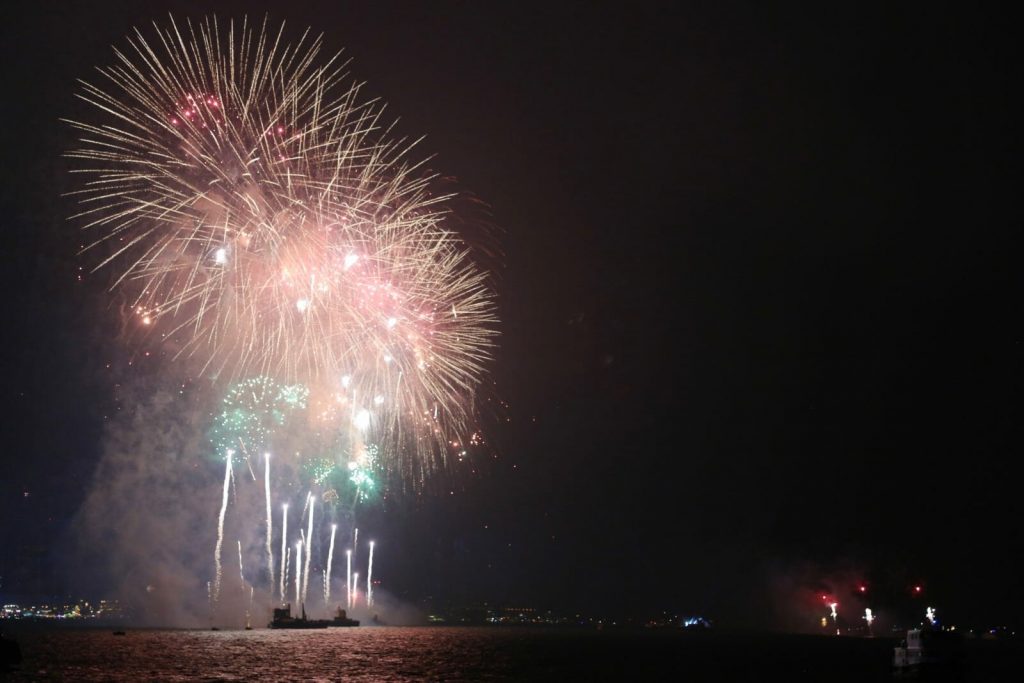
The highlight of the evening? You guessed it! Witness a dazzling display of fireworks that will light up the sky and your heart. We’ll cruise back to the pier at 12:30am, concluding an unforgettable night.

New Year cruise

Click on the book now button for all the menu and drinks information. Strictly adults only.

* Early-bird pricing until 30th September 2025.

The best of Vegetarian Cuisine in Hong Kong

Why do we have vegetarian cuisine in Hong Kong?

Vegetarianism has deep roots in Hong Kong, largely influenced by Buddhist traditions. Buddhist monks and followers have long practiced vegetarianism as a way of promoting compassion and minimising harm to living beings. You will also find that many Hong Kong people will choose to eat a vegetarian diet on the 1st and 15th days of each lunar month due to ancient beliefs and the significance of renewal, cleansing and a fresh start that comes along with the new moon and full moon stages of the lunar calendar. This has led to the development of a rich vegetarian cuisine that emphasises fresh vegetables, tofu, and grains. The simplicity of these dishes also stems from historical economic constraints; during hard times, many families could only afford plant-based meals due to the high cost of meat.

Vitasoy and Soy Products

Since its introduction in 1940 by Lo Kwee-seong, Vitasoy is an established iconic brand in Hong Kong, deeply woven into the city’s pop culture and collective memory. Often referred to as “childhood in a box,” Vitasoy’s distinctive soy milk evokes nostalgia among many, while seasonal warm soy milk sold in glass bottles is a beloved winter treat. Lo Kwee-seong was a Hakka entrepreneur who founded Vitasoy amidst the socio-economic challenges of the time. Inspired by a talk on soybeans, which were referred to as “the cow of China” for their high protein content, Lo recognized the need for affordable, nutritious food. Vitasoy products have become an integral part of vegetarian cuisine in Hong Kong. Read more on the history of the company here in this SCMP article.

Lunar New Year Sham Shui Po beancurd
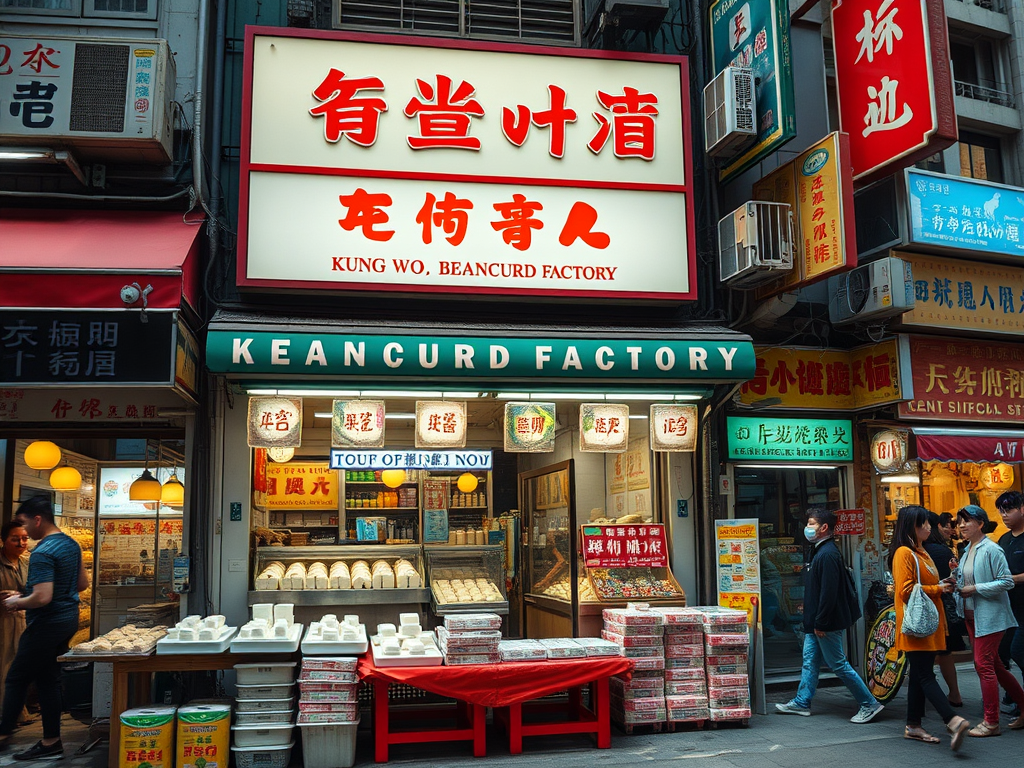
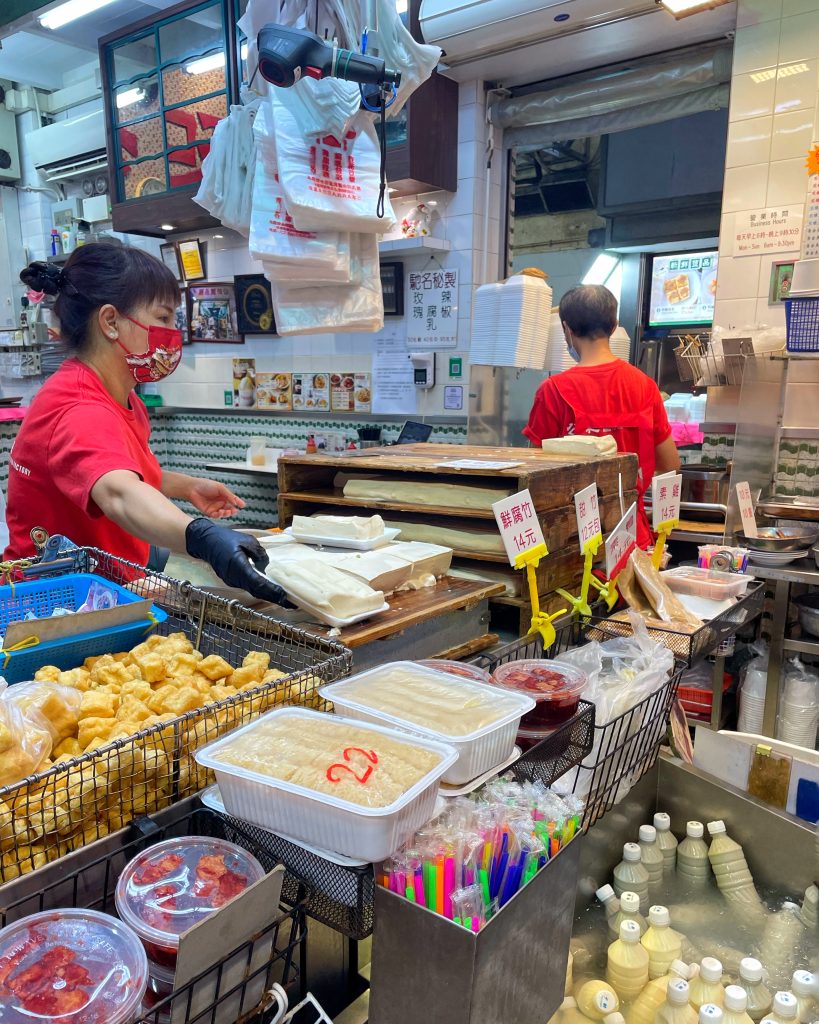
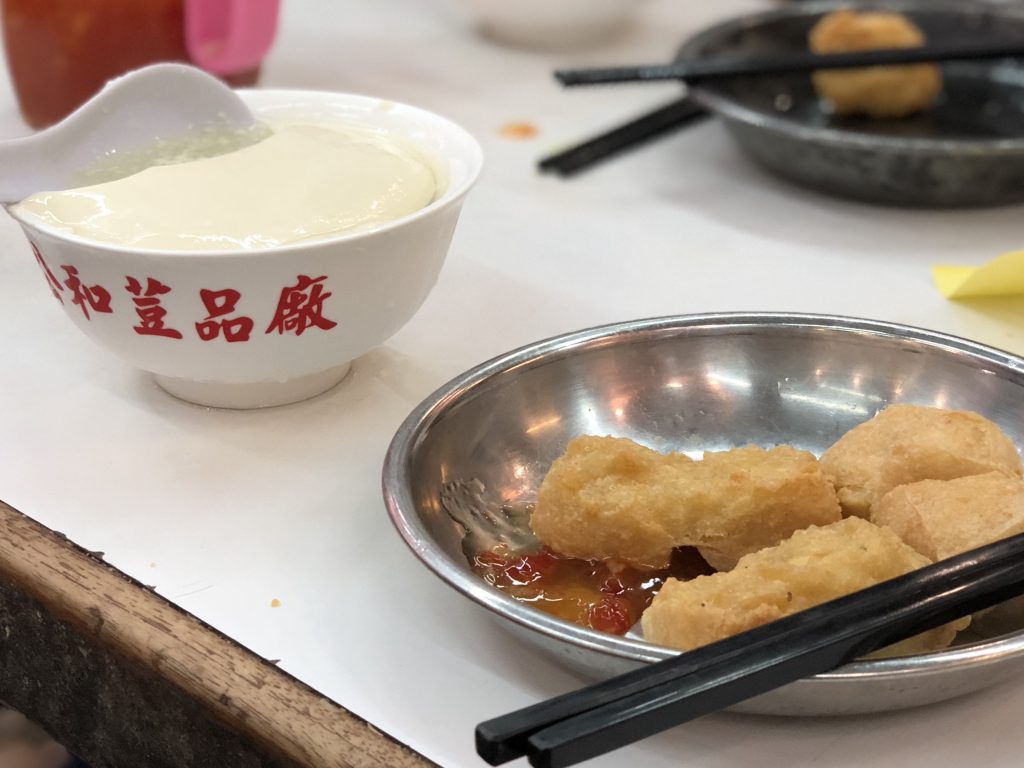
Kung Wo Beancurd Factory, Sham Shui Po

For some of the best examples of beancurd and tofu products, visit the family-run shop Kung Wo Beancurd Factory, G/F, 118 Pei Ho Street, Sham Shui Po.

Buddhist Vegetarian cuisine

Buddhist vegetarian cuisine often features humble ingredients prepared with great care. The focus is on enhancing the natural flavours of vegetables and using herbs and spices to create delicious dishes. The use of ingredients like fermented bean curd, wheat gluten or seitan, mushrooms, and a variety of vegetables allows for a delicious depth of flavour. These days you will also find many meat alternatives used in these dishes. However, you will not find pungent vegetables included in the preparation of Buddhist dishes, such as garlic, chive, leek and onion – these are said to increase sexual desire when cooked, and anger when eaten raw. This particular diet is a cornerstone of vegetarian cuisine among Buddhists.

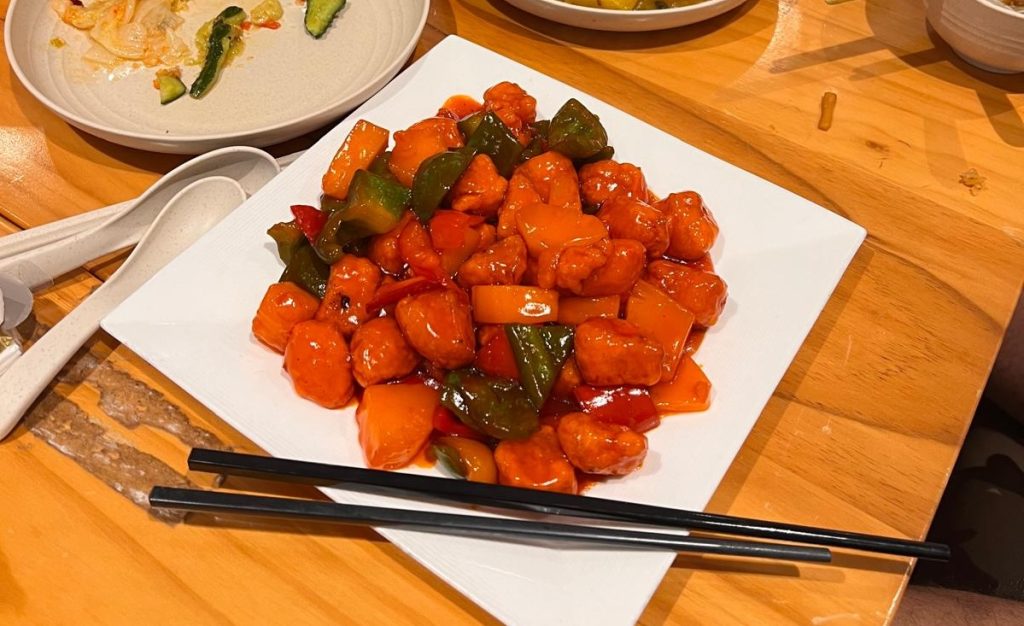
Sweet and Sour Mushroom, Daily Green Restaurant, Wong Tai Sin

For some of the best examples of Buddhist vegetarian cuisine, visit the restaurants at Chi Lin Nunnery in Kowloon or Po Lin Nunnery on Lantau Island (next to the Big Buddha), or Fook Lau Sau Vegetarian Restaurant, 8 Tit Hong Lane, Central.

Classic Vegetarian Hong Kong Foods

While vegetarian cuisine has its own identity, here are some classic Hong Kong foods which are also vegetarian:

  1. Pineapple Bun (菠蘿包): This sweet bun topped with a crumbly, pineapple-shaped crust is a beloved snack. Depending on your vegetarian preferences, this is often enjoyed with a slice of butter (also contains milk and eggs).
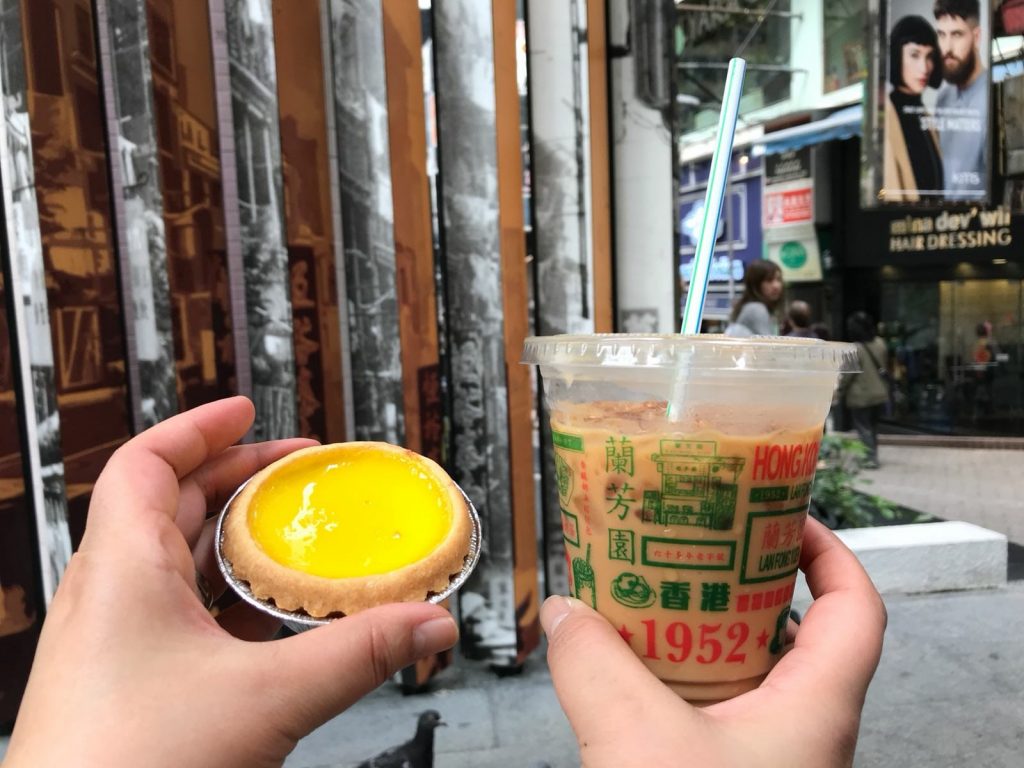
  2. Egg Tart (蛋撻): Though traditionally made with eggs, these tarts can sometimes be found in vegetarian variations. The flaky crust and creamy filling make it a staple dessert (also contains milk and butter). See our other post about the differences between Hong Kong and the Macau style egg tarts here.
  3. Milk Tea (奶茶): Hong Kong-style milk tea is typically made with black tea and evaporated milk. Learn more about Hong Kong Milk tea here in another one of our posts.
group food tour hong kong
Lan Fong Yuen Café, Central

4. Red Bean Pancakes (紅豆燒餅): Soft rice-dough pancakes, fried lightly each side, and filled with sweet red bean paste, offering a delightful contrast of textures.

5. Steamed Rice Rolls (腸粉): Silky and smooth steamed rice noodle rolls served with soy sauce, sweet sauce, sesame sauce, chilli sauce (optional) and sesame seeds. The combination of the sauces add something special to the flavour to this inexpensive street food.

Hop Yik Tai Cheung Fan, Sham Shui Po

6. Tofu Pudding (豆腐花): A soft and silky dessert made from fresh tofu, usually served with syrup or sweet toppings.

Vegetarian food tour
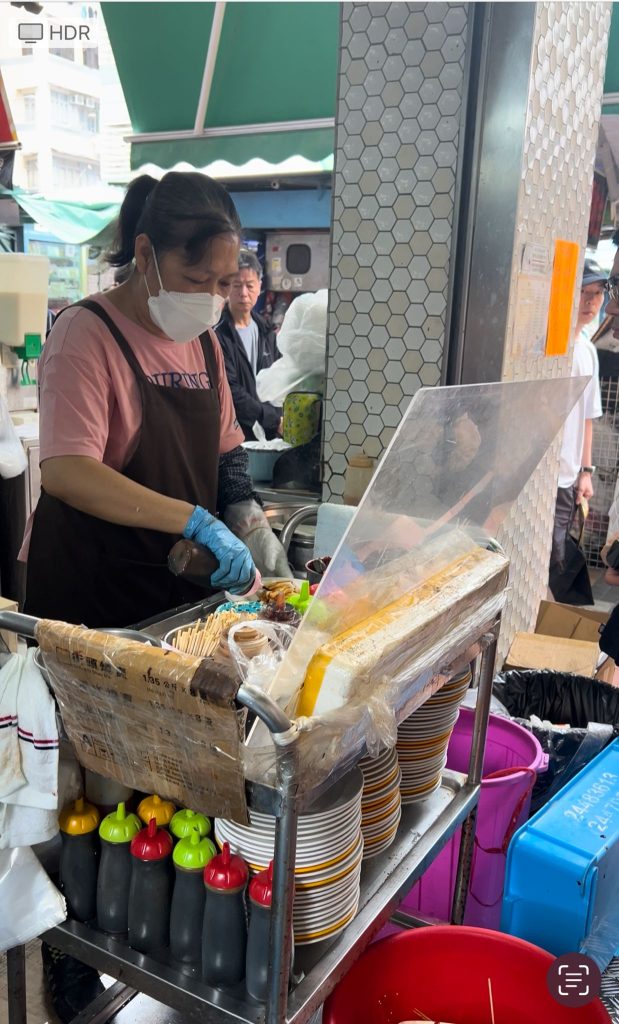
Kung Wo Beancurd Factory, Sham Shui Po

Most of these items can be found in the many local bakeries or Cha Chaan Tengs (Hong Kong style cafés), such as Kam Wai Café in Mong Kok, Lang Fong Yuen in Central and Kam Kee Café in Aberdeen.

Other vegetarian Chinese dishes VERY worth trying

Hong Kong’s vegetarian offerings include a variety of delicious dishes, such as:

  • Three Treasures of the Earth (地三鲜): A stir-fry of eggplant, potatoes, and bell peppers, showcasing the rich flavors of fresh vegetables.
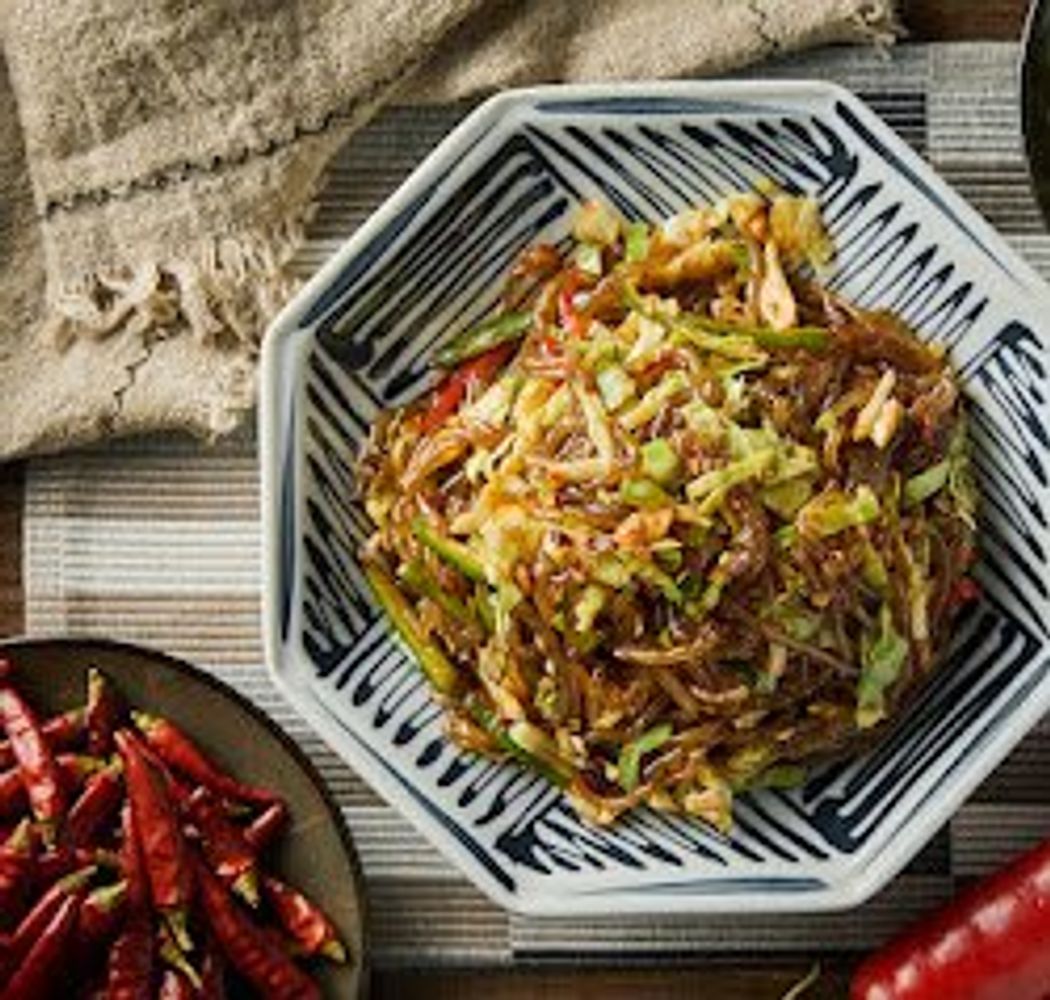
  • Stir-Fried Spicy and Numbing Potato Noodles (麻辣燙炒薯粉): A spicy dish that combines chewy potato noodles with a mix of vegetables and spices.
  • Vegetable Dumplings (素饺子): Steamed or pan-fried dumplings filled with a mix of seasonal vegetables.
Chilli Fagara, Central

The Three Treasures is a classic Buddhist vegetarian dish found in their restaurants. The spicy noodles can be found in Sichuan restaurants such as Chilli Fagara in Central, and the vegetable dumplings are a mainstay of Hong Kong – try Grandma’s dumplings in Tai Wai (婆婆家餃子館).

Vegetarian Food Tour

If you don’t have a lot of time to explore these places on your own, come with us on our Hong Kong Greeters vegetarian food tour with a small group of like-minded individuals. This is an excellent way to explore the city’s vibrant culinary scene through delicious plant-based dishes. Find out more here: Vegetarian food tour. Join us to discover the best of vegetarian cuisine in Hong Kong.

Vegetarian Food Tour
Hong Kong Greeters Vegetarian Food Tour

The Ultimate Guide to Mooncakes in Hong Kong

With the Mid-Autumn Festival just around the corner, mooncakes are once again taking center stage across Hong Kong. These dense, circular pastries are a beloved tradition this time of year, and there’s no better place to enjoy them than in the heart of the city.

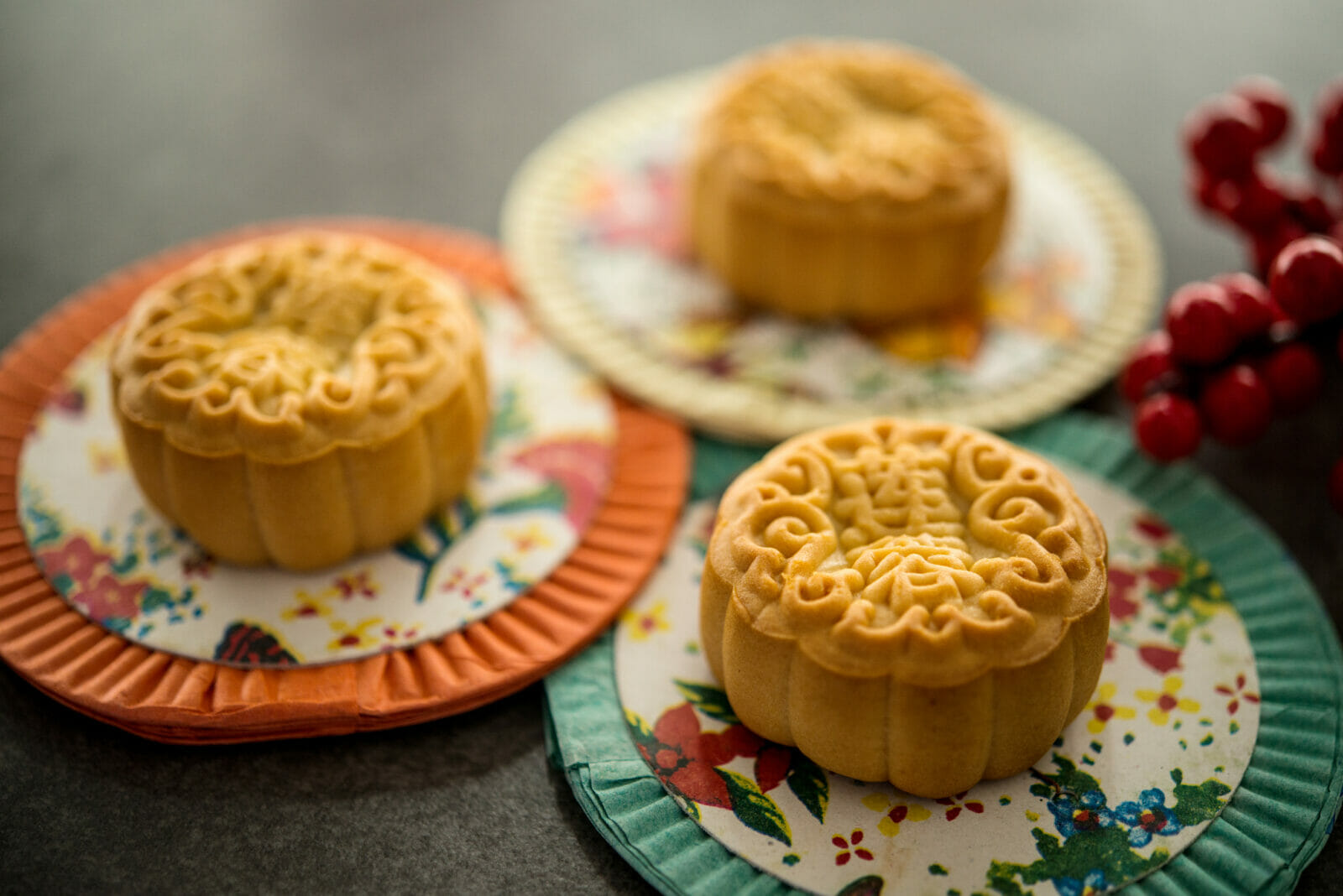
Mooncakes have a rich history in Chinese culture, symbolizing family reunion and the harvest moon. While the classic lotus seed paste and salted egg yolk variety remains a perennial favorite, Hong Kong’s mooncake scene has expanded to include all sorts of innovative and delectable flavors.

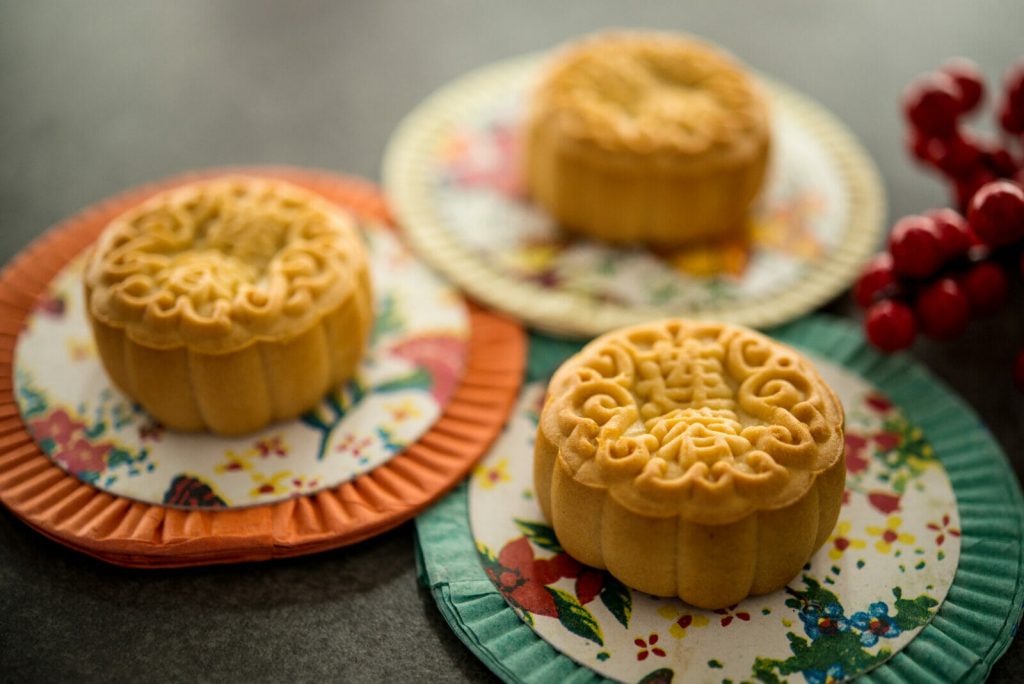
Mid Autumn Mooncakes

Whether you’re a mooncake aficionado or newcomer to this delightful treat, here’s your ultimate guide to the best mooncakes in Hong Kong:

Traditional Baked Mooncakes

For a true taste of tradition, you can’t go wrong with the classic baked mooncakes. The best versions feature a buttery, flaky exterior that gives way to a rich, velvety filling. Some top spots for traditional baked mooncakes include:

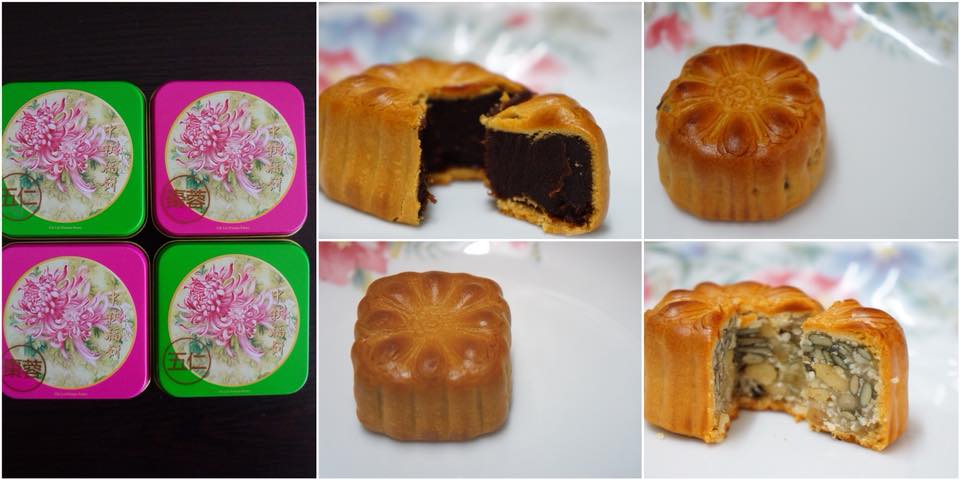
  • Hang Heung Chinese Cake Shop – This Yuen Long institution has been crafting mooncakes since 1920. Their classic lotus seed paste and salted egg yolk mooncakes are beloved by locals. Visit to try them on our Explore Hong Kong tour in Yuen Long this September, more details at the bottom of the page.
  • Taipan Bakery – A Hong Kong institution, Taipan is known for its wide selection of traditional mooncake flavors, from the classic to the more novel, like black sesame.
  • Pekoe & PetalsPekoe&Petals is bringing you our Mid-Autumn Festival Gift Boxes once again (two tea + two mooncakes), curating exceptional artisanal tea with handcrafted, traditional mooncakes from legendary Eight Angels Bakery.

Snow Skin Mooncakes

In more recent years, snow skin mooncakes have become increasingly popular in Hong Kong. These soft, chilled mooncakes have a delicate, mochi-like exterior that contrasts beautifully with the dense, flavorful fillings. Some standout snow skin mooncakes include:

  • Mei Xin – This local brand is renowned for its innovative snow skin flavors, from the classic mango to more unique offerings like rose and lychee.
  • The Peninsula Hong Kong – The iconic hotel’s snow skin mooncakes, with their elegant, intricate designs, make for a luxurious seasonal indulgence.
  • Fortnum & Mason – The British department store’s Hong Kong outpost offers a selection of premium snow skin mooncakes, including a Champagne-infused version.

Unique and Specialty Mooncakes

In recent years, Hong Kong has also seen the rise of mooncakes catering to more niche tastes and dietary preferences. Some to look out for:

Vegan Mooncakes

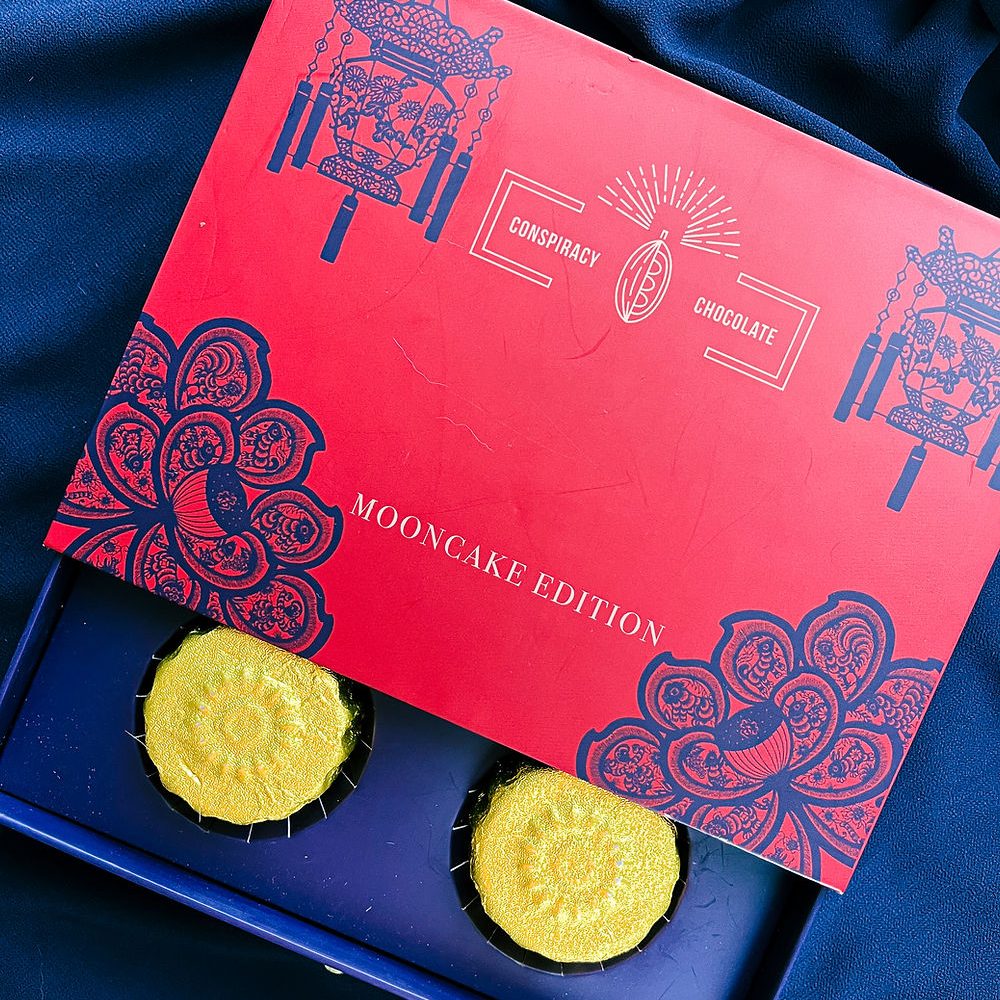
Conspiracy Chocolate, a local artisanal chocolate maker, also creates vegan mooncakes in unique flavours like dark chocolate and mango. A little bird told us they are also creating a line of vegan mooncakes for The Mandarin Oriental Hong Kong, with a chocolate version filled with their signature rose jam (in store only).

Vegetarian Mooncakes

The Chi Lin Nunnery, a renowned Buddhist temple, partners with Kee Wai Bakery to produce exquisite vegetarian mooncakes. These mooncakes use no egg or dairy, but are still rich and satisfying.

Image from 素食青年

Bath Bomb Mooncakes

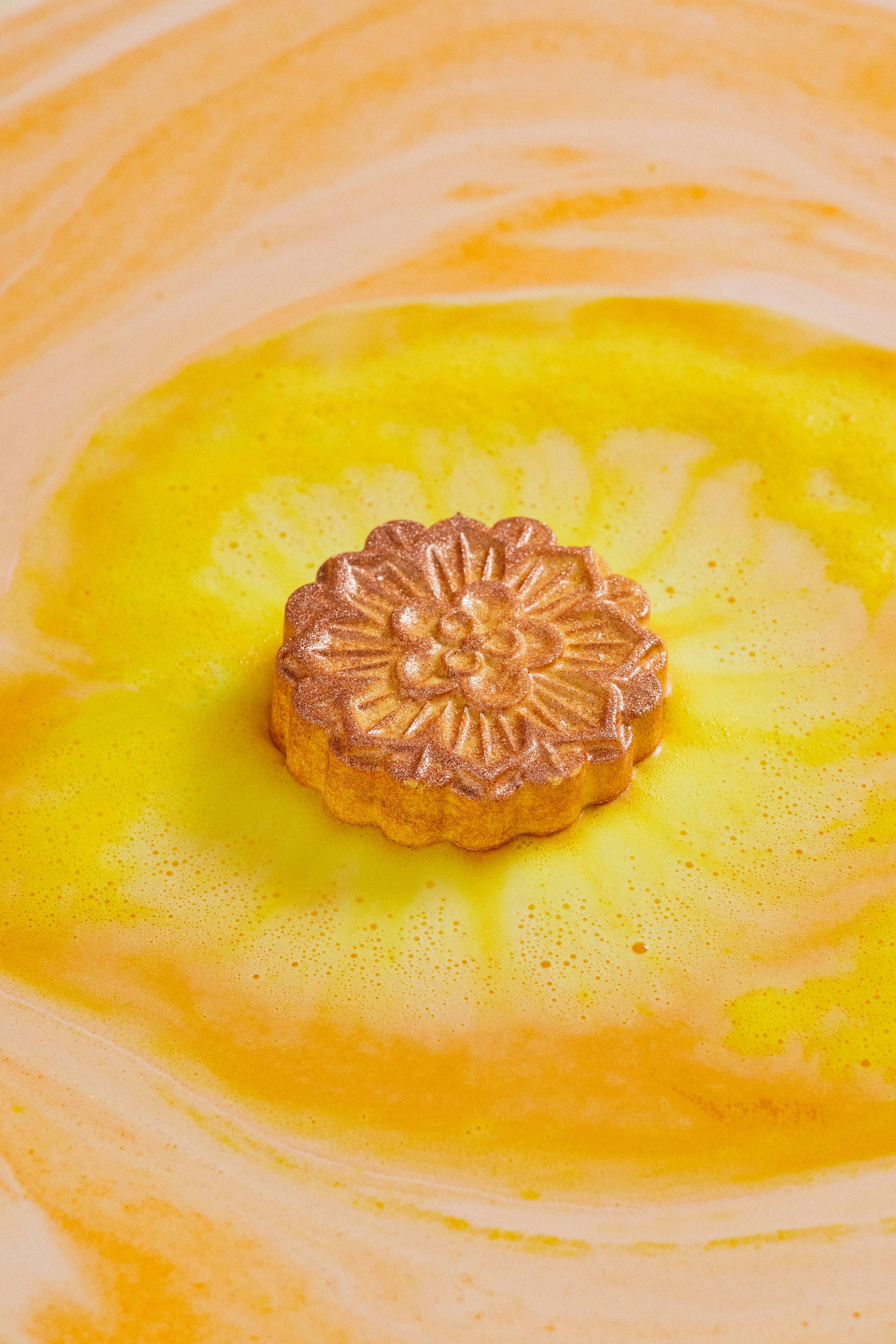
For a truly unique experience, the popular beauty brand Lush creates “bath bomb mooncakes” – mooncake-shaped bath bombs that double as whimsical Mid-Autumn Festival gifts. These sandalwood scented bath bombs “transform the warm bath into an orange-yellow hue, reminiscent of the full moon shining amidst the starry night sky, evoking the joyous moments of people’s reunion.”

They’re also vegan!

Disney-Themed Mooncakes

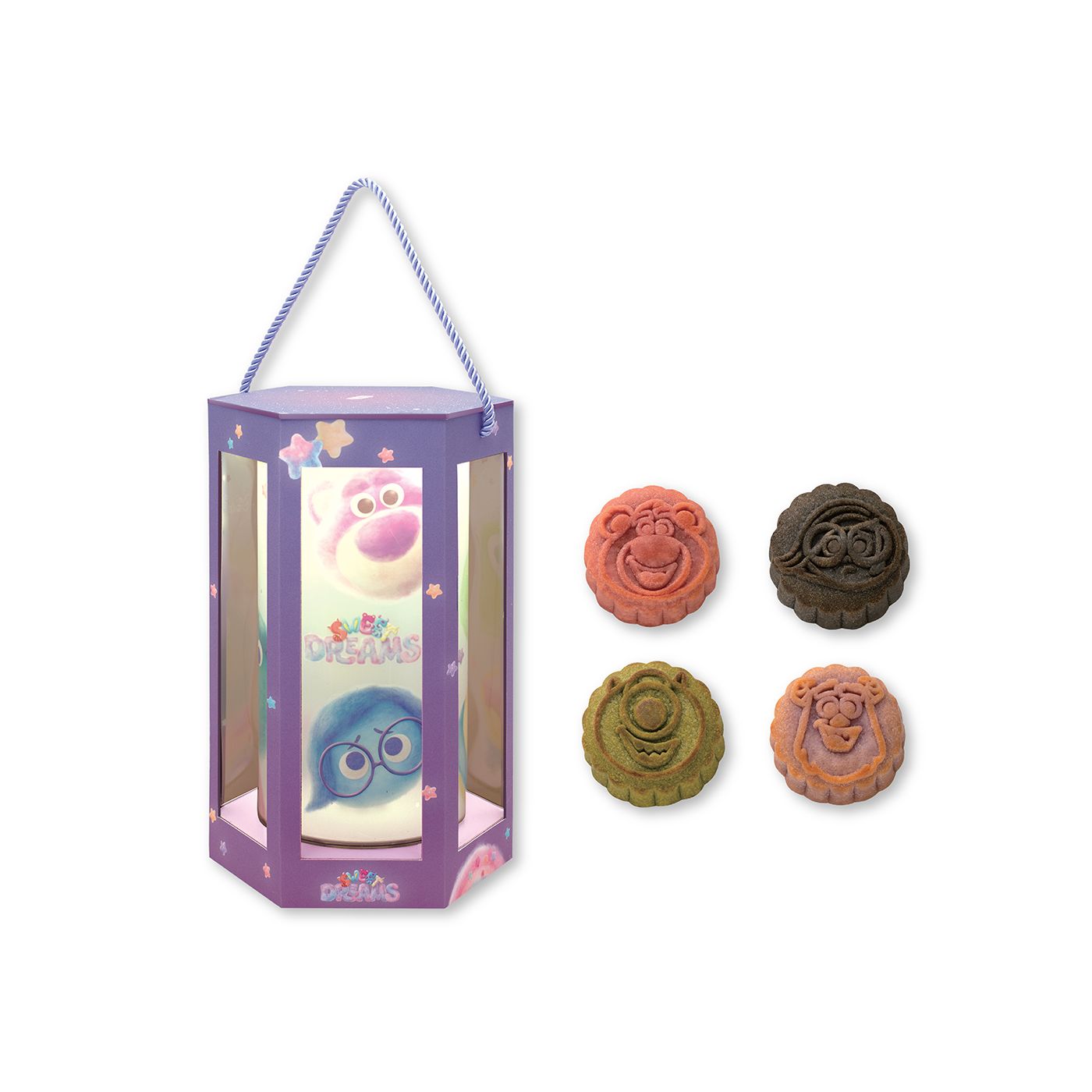
Kee Wai Bakery also offers a line of adorable Disney character-themed mooncakes, perfect for families and Disney fans. The “Disney Sweet Dreams Mooncake Gift Box” features four mini mooncakes:

  • Mini Blueberry Custard Mooncake in the shape of Sulley (with purple yam flavored crust)
  • Mini Pineapple Custard Mooncake in the shape of Mike (with matcha flavored crust)
  • Mini Strawberry Milk Custard Mooncake in the shape of Lotso (with strawberry flavored crust)
  • Mini Mango Custard Mooncake in the shape of Sadness (with sesame flavored crust)

Mid-Autumn Festival Tours

For a more immersive mooncake experience, consider joining one of our Mid-Autumn Festival tours happening on September 8th and September 14th. These guided tours will take you through the vibrant Mid Autumn markets in Yuen Long, explore the history and traditions behind this beloved festival, and of course, let you sample the best mooncakes Hong Kong has to offer. See link below to book.

No matter your mooncake preference, Hong Kong has an abundance of options to satisfy every taste. So get out there and indulge in this beloved Mid-Autumn Festival treat – your taste buds will thank you.

Chasing Rainbows 🌈

A Quest for the most colourful Instagram-Worthy Spots in Hong Kong

Hong Kong has a secret – it’s a treasure trove of Instagram-worthy, rainbow-infused spots that are as elusive as a pot of gold at the end of a rainbow. In honour of the Gay Games and Pride Month in November, and the recent news that one of our most favourite public housing estates, Choi Hung, may be redeveloped – we invite you to embark on a whimsical adventure in search of these vibrant rainbow inspired landmarks.

🌈 The Chromatic Resplendence of Choi Hung Estate 🏢

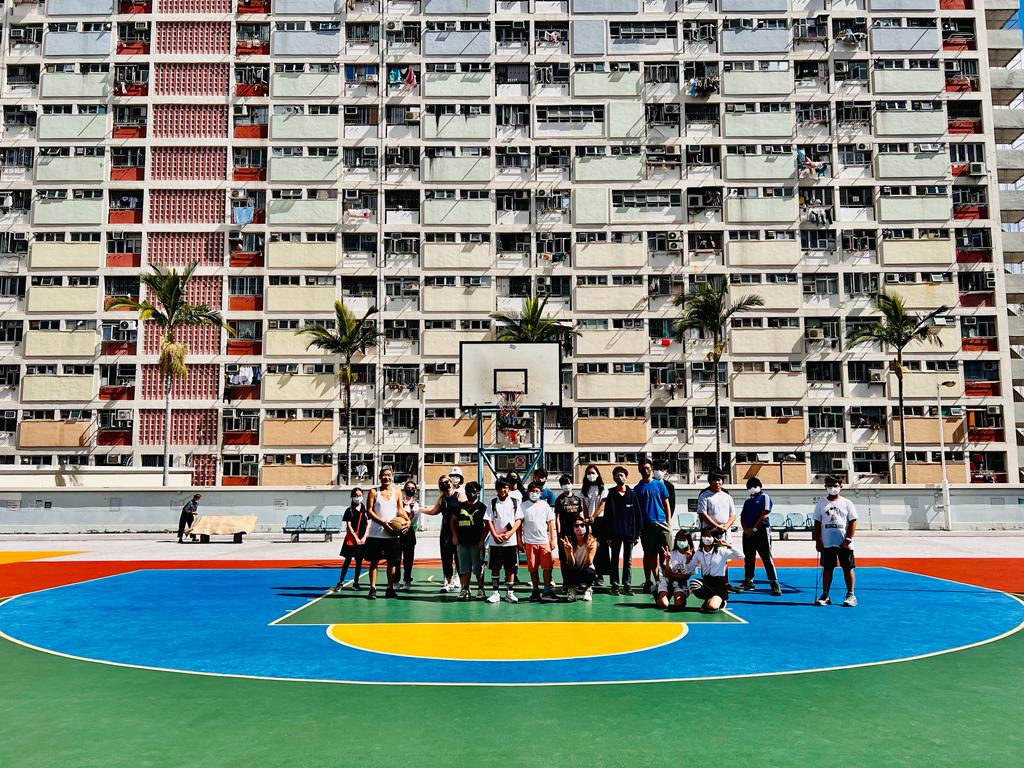
Our journey begins at the famous Choi Hung Estate, a neighborhood that could give the world’s most vivid rainbows a run for their money. This 1960’s public housing estate won awards back in the early days for its architectural design, and was the largest housing estate ever built at the time.

Choi Hung rainbow estate

More recently, the vivid colours of the estate, painted in the seven rainbow shades, has become a beloved landmark in Hong Kong with the popularity of Instagram and the rise in grass roots experiences – we even have this iconic location listed on our Instagram tour itinerary. Its charming buildings, each awash in a different hue, make it an Instagrammer’s paradise. Why is it called Choi Hung (彩虹)…. because in Cantonese this means “rainbow”!

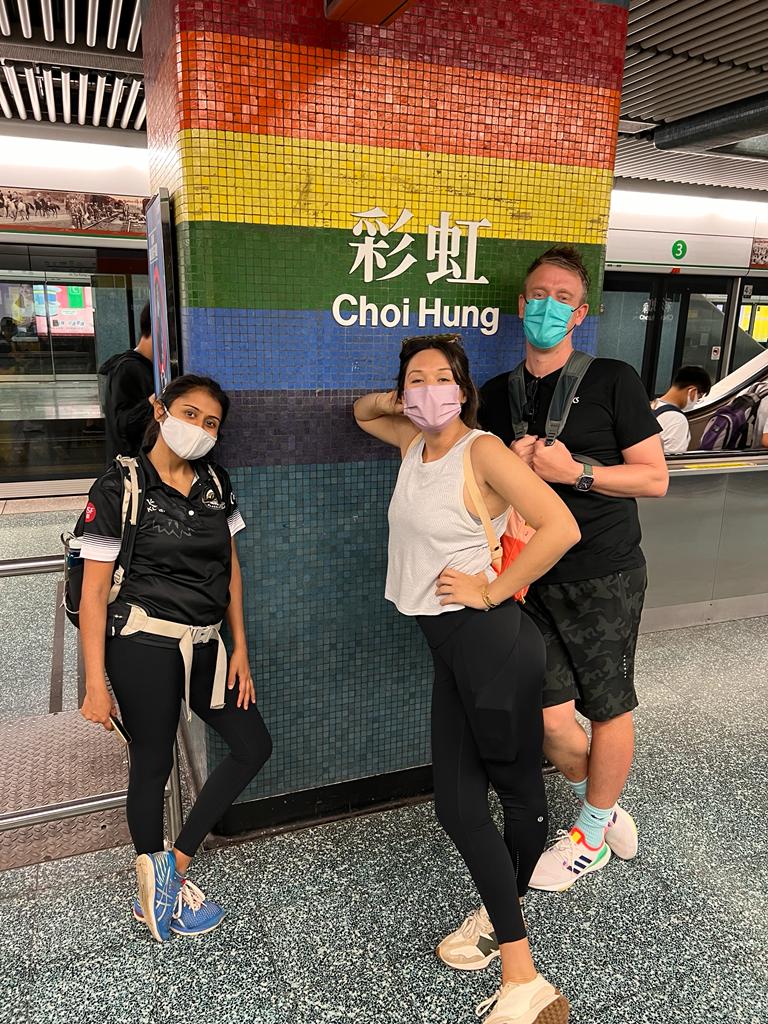
🚇 All Aboard the Rainbow Express at Choi Hung MTR Station 🌟

Choi Hung MTR Station stood among the initial stations unveiled to the public during the inaugural phase of Hong Kong’s underground transportation system, 1st October 1979.

Rainbows in Hong Kong Choi Hung

Every MTR station is designated a distinct wall-tile colour for easy identification, in fact, you can make visiting and photographing them another game all by itself! But without question, the most photographed MTR station of them all, is Choi Hung, with its navy blue livery and rainbow coloured stripes.

By the way, we love this MTR station inspired puzzle from Lion Rock Press, and the bonus is, its double sided!!!!

🏫 The Rainbow School Building in Lok Wah Estate

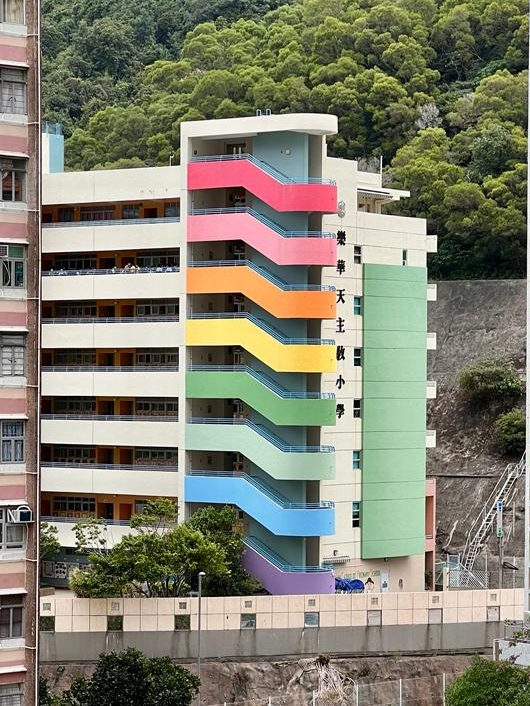
The Lok Sin Tong Yeung Chung Ming Primary School is a little hard to spot, although this is a great view from another Instagram favourite location – the Lok Wai South Estate car park. The beautiful rainbow colours speak volumes when you learn that their school motto is “Benevolence, Love, Diligence and Sincerity”.

Rainbow Lok Wah Estate

🌆 The AIA Central Building: Lighting Up the Sky with Pride

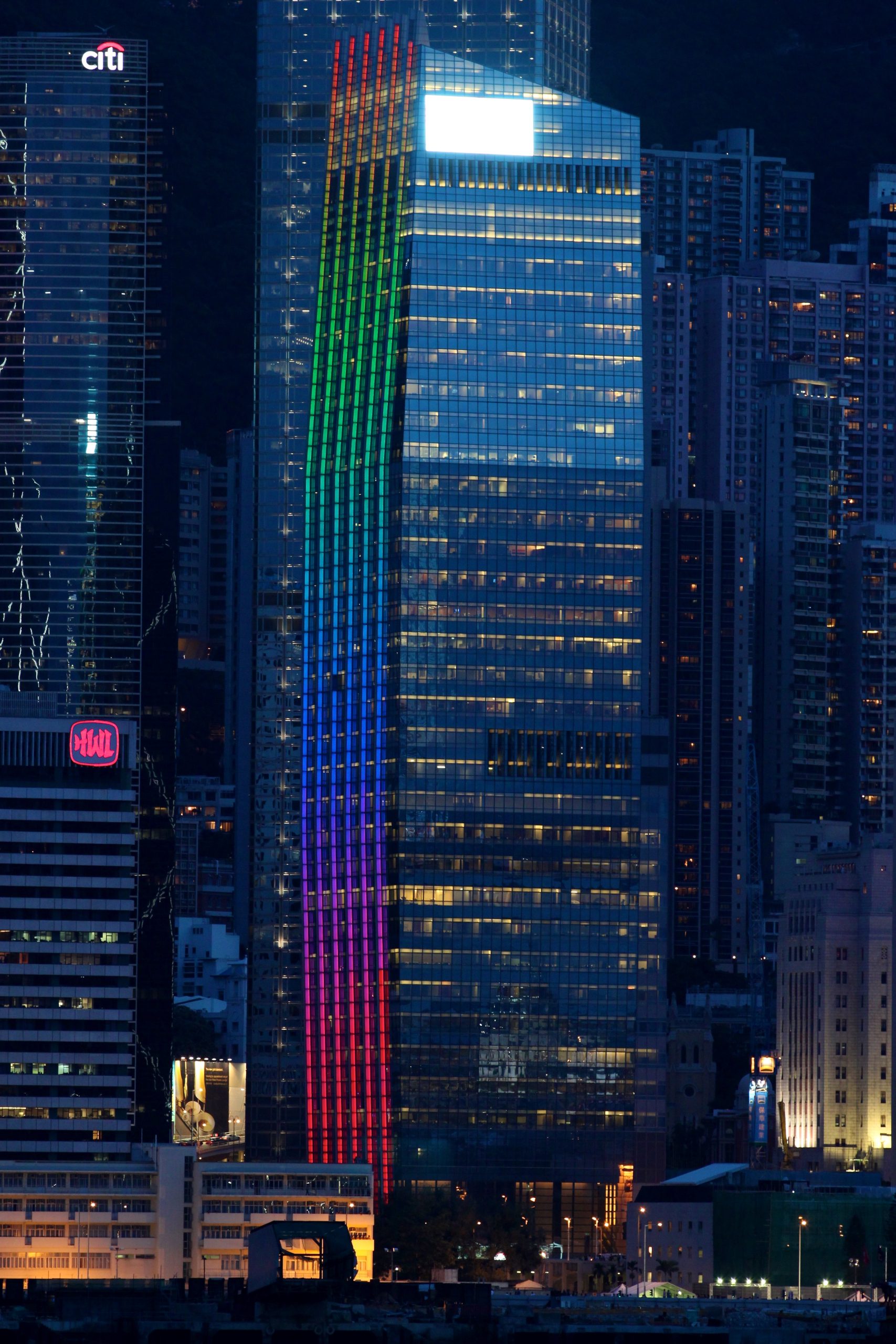
The AIA Central building stands on Victoria Harbour at the junction of Murray Road and Connaught Road, Central. Its inception dates back to 2005 when it was known as the AIG Tower, featuring an architectural design artfully mirroring the silhouette of a sail from a traditional Chinese junk boat. The architects, Skidmore, Owings and Merrill (SOM) also designed the Sears Tower in Chicago, Canary Wharf in London and a nearby neighbour; the Hong Kong Convention and Exhibition Centre.

rainbow buildings Hong Kong

The east side of the building, facing Murray Road, is where its vertical fins illuminate in a spectrum of rainbow colours after nightfall. According to the Tourism Commission, at the top of AIA Central is one of the most powerful LED video displays in Asia, with high-resolution video capacities utilising over 281 trillion RGB colours and advanced graphics processing. Quite substantial and a reason why this building stands out as part of the nightly light and sound visual extravaganza, The Symphony of Lights. Watch the iconic Hong Kong skyline light up, and in various location, dance to music! Best vantage points are the Tsim Sha Tsui promenade and the Hong Kong Convention and Exhibition Centre.

🌟 Unveiling the Rainbow Unicorn Room at The Fullerton Hotel 🦄

Unicorns are elusive creatures, and so are the Rainbow Unicorn Rooms at The Fullerton Hotel!!

A firm favourite for kids and unicorn lovers alike, and bonus points for being next door to another one of Hong Kong’s brilliant new attractions, Ocean Park’s outdoor water park, WaterWorld.

New Addition: 🌊 The Splash of Color at Ocean Park Water World 🌈

If you are making this a game, what better way to start than at the WaterWorld Rainbow slide!

🍞 The Magic of Rainbow Toast at Kala Toast 🌈

Ka La Rainbow Toast Hong Kong

No trip to Hong Kong is complete without a visit to Kala Toast for their renowned Rainbow Toastie. This little food outlet went viral back in 2016 and upscaled their tiny shop in Tsuen Wan (where the image was taken) to landing a prime spot in the Peak Tower at Hong Kong’s tourism “must-do”, Victoria Peak. This deliciously colourful treat combines the joy of a rainbow with the comfort of toast, and combining layers of tomato, basil and lavender flavoured cheeses.


Embrace your inner rainbow chaser and embark on this magical quest throughout Hong Kong. Whether you’re a seasoned Instagrammer or just someone looking for a little fun and whimsy, these landmarks will add a splash of colour to your adventure 🌈✨

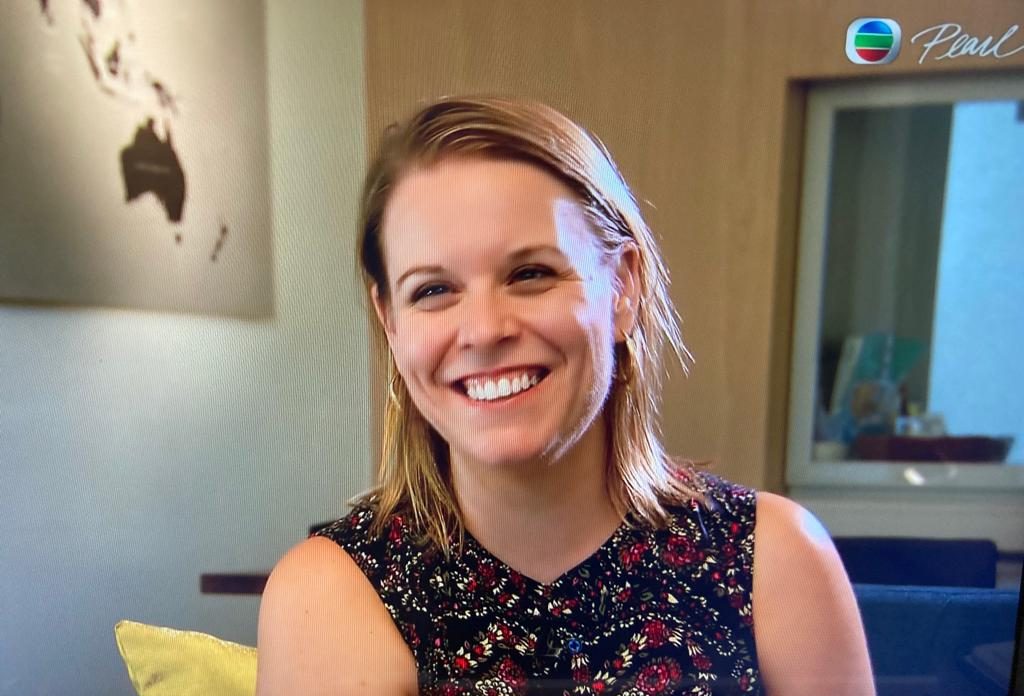
Amy Overy Shines Spotlight on the Future of Tourism on TVB Pearl Magazine

📢 Exciting News! Amy Overy, Founder of Hong Kong Greeters, Discusses the Future of Tourism on TVB Pearl Magazine

We are delighted to share that Amy Overy, the visionary behind Hong Kong Greeters, recently made an appearance on TVB Pearl Magazine to delve into the ever-evolving landscape of the post-COVID tourism industry. In this engaging interview, she offered valuable insights into a range of topics that are shaping the future of travel and tourism in Hong Kong.

Changing Visitor Preferences
One of the key points highlighted during the interview was the shift in visitor preferences in a post-pandemic world. With a focus on safety, unique experiences, and authentic connections, tourists are seeking more personalized and immersive journeys. Amy discussed how Hong Kong Greeters is at the forefront of catering to these evolving needs by providing customized and memorable experiences for travelers.

Training Challenges
Amy also touched upon the challenges faced by the tourism industry in training and nurturing talents. She emphasized the importance of equipping tour guides with the skills and knowledge required to offer exceptional experiences. Hong Kong Greeters, under Amy’s leadership, has been actively involved in addressing these challenges and providing high-quality training programs for guides.

Kai Tak Cruise Terminal
Additionally, the interview shed light on the Kai Tak Cruise Terminal, a vital part of Hong Kong’s tourism infrastructure. Amy discussed its significance in attracting cruise passengers and the potential it holds for further enriching the tourism experience in the city.

We are incredibly grateful to Melissa Gecolea and TVB for their support in promoting the growth and development of the tourism industry. Their dedication to highlighting industry insights and trends helps create a brighter future for Hong Kong tourism.

For those interested in English-speaking tour guide training courses, the interview also unveiled essential information about upcoming training dates in the industry. If you are interested in becoming a tour guide, please email amy@hkgreeters.com.

To watch the full interview and stay informed about the latest developments in Hong Kong tourism, follow the link below:

📺 Watch the Interview on TVB Pearl Magazine

Thank you for being part of the journey to discover the vibrant world of Hong Kong tourism!

#HongKongTourism #TVBPearlMagazine #DiscoverHongKong #HKTB

The Fiery Return of the Tai Hang Fire Dragon

A Living Piece of Hong Kong’s Cultural Heritage

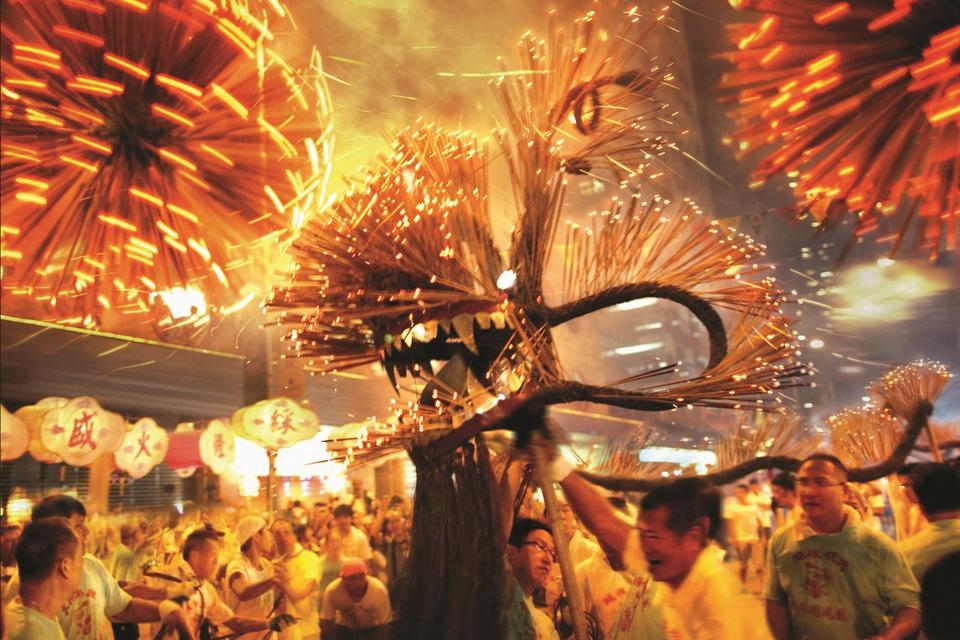
In the heart of Hong Kong’s bustling city life, an ancient tradition is set to ignite the night with its fiery brilliance. After a hiatus since 2020, the Tai Hang Fire Dragon Dance is returning, bringing with it the energy and vibrancy that has made this event a cornerstone of the city’s Mid-Autumn Festival celebrations for over a century.

Fire Dragon

Credit: Hong Kong Tourism Board

Origins of the Tai Hang Fire Dragon

The tradition of the Fire Dragon Dance in Tai Hang has its roots firmly planted in the late 19th century. Legend has it that the Tai Hang village, originally a small Hakka fishing settlement, was plagued by a series of calamities, including a devastating plague and typhoon. In an attempt to dispel the misfortune, a village elder suggested performing a Fire Dragon Dance and setting off firecrackers during the Mid-Autumn Festival.

The villagers heeded the advice, crafting a dragon from straw and covering it in incense sticks, which they then lit. The dance was a success, and the plague vanished from Tai Hang. The Fire Dragon Dance then became an integral part of the annual celebrations, growing in grandeur year after year.

The Fire Dragon Dance Today

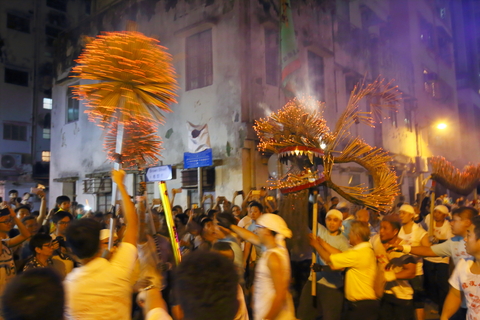
After a pause since 2020, the Tai Hang Fire Dragon Dance is making its much-anticipated comeback. The dragon, an awe-inspiring sight stretching over 67 meters long and adorned with around 30,000 incense sticks, is brought to life by over 300 performers. These skilled dancers maneuver the dragon through the narrow streets of Tai Hang, in a parade that lasts for three nights during the Mid-Autumn Festival.

The atmosphere during the dance is electric, filled with the scent of burning incense, the rhythm of drums and cymbals, and the cheer of the crowds.

This year the festival will take place from 28th – 30th September. Be sure to secure your spot by 6pm each evening to see the incredible skills of the dancers and the heady atmosphere of this one-off occasion.

Cultural Significance

In 2011, the Tai Hang Fire Dragon Dance was inscribed onto China’s third national list of intangible cultural heritage, a testament to its significant role in Hong Kong’s cultural history.

The dance is not merely a spectacle but a symbol of the enduring sense of community in Tai Hang. Preparation for the event begins months in advance, with the older generation imparting the tradition and know-how to the younger ones, ensuring the dance’s survival and continuity.

Experience the Magic

The return of the Tai Hang Fire Dragon Dance marks a significant moment, a rekindling of a tradition that embodies the spirit of Hong Kong’s rich cultural heritage. As the dragon dances under the moonlight, amidst the riot of light and sound, one can’t help but be swept up in the magic of the moment.

Whether you’re a local or a traveler seeking to immerse yourself in Hong Kong’s cultural tapestry, the comeback of the Tai Hang Fire Dragon Dance is an event that you must not miss.

Hong Kong Greeters will be running a Tai Hang Fire Dragon Experience + Teacake Masterclass on 26th August for The Australian Association of Hong Kong if you would like to know more about this wonderful event.